
What's Happening?
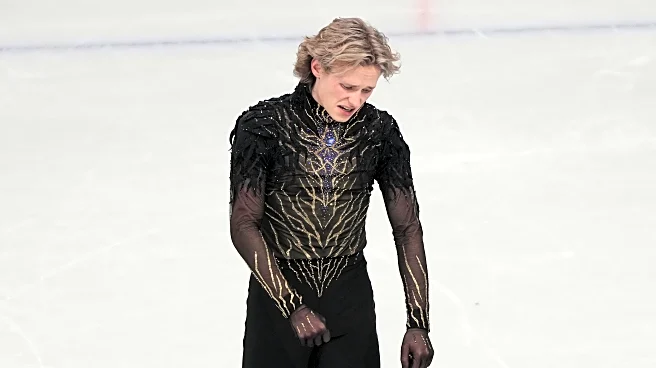
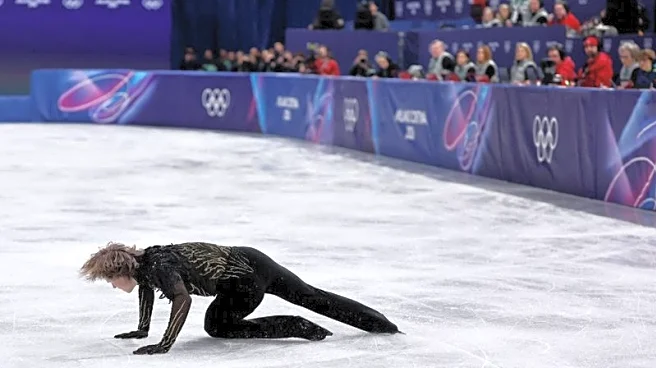
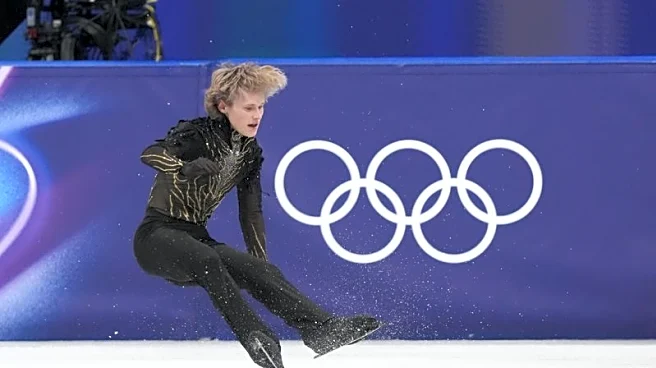
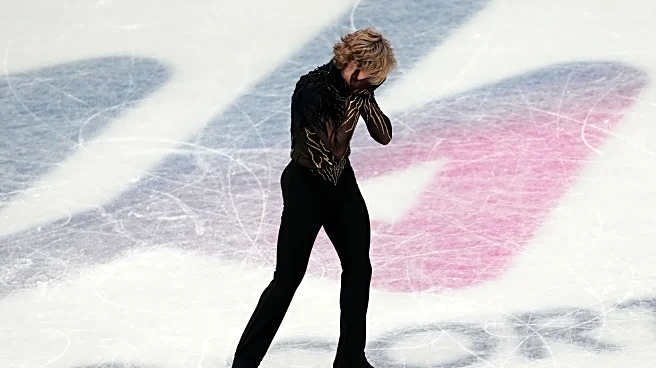
Ilia Malinin, a 21-year-old American figure skater, faced a challenging Olympic debut at the Milano Cortina 2026 Winter Games. Despite being a favorite for the gold medal in the men's singles event, Malinin's performance was marred by two falls and difficulties with his jumps, resulting in an unexpected eighth-place finish. This outcome is considered one of the most significant upsets in Olympic figure skating history. Malinin, known as the 'Quad God' for his technical prowess, had maintained a two-year unbeaten streak leading up to the Olympics. Following his performance, Malinin shared a video on social media reflecting on his experience, highlighting the mental toll of online abuse and the pressure of competing on the world stage. He plans
to participate in a skating exhibition in Milan and will defend his title at the upcoming world championships in Prague.
Why It's Important?
Malinin's experience underscores the intense pressure athletes face during high-stakes competitions like the Olympics. His candid reflection on the mental health challenges associated with online criticism and performance expectations highlights a growing concern in sports. The incident draws attention to the need for better support systems for athletes dealing with mental health issues. Additionally, Malinin's story may influence public perception and spark discussions about the pressures of competitive sports, potentially leading to changes in how athletes are supported and protected from online abuse. His continued participation in upcoming events suggests resilience and a commitment to overcoming setbacks, which could inspire other athletes facing similar challenges.
What's Next?
Malinin is set to participate in a skating exhibition in Milan, where he may provide further insights into his Olympic experience. His upcoming defense of his world championship title in Prague will be closely watched, as it represents an opportunity for redemption and a chance to reaffirm his status in the figure skating world. The response from fans, fellow athletes, and the broader sports community could influence future discussions on athlete mental health and the impact of social media. Stakeholders in the sports industry may consider implementing measures to better support athletes' mental well-being and address the issue of online harassment.