

What's Happening?
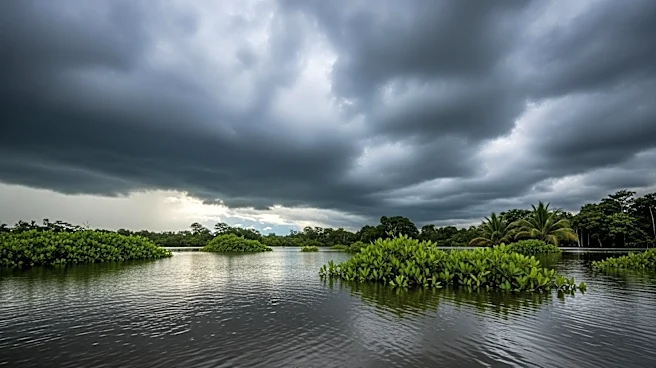
Chris Pratt, the Hollywood actor known for his role in the Jurassic World franchise, disclosed that a significant part of the film's set was destroyed due to severe storms in Hawaii. The storms, identified as Kona lows, resulted in the worst flooding
the region has seen in 20 years, with a reported 2 trillion gallons of rainfall over 14 days. Pratt mentioned that a tree fell on the bungalow of his character, Owen Grady, during these storms. This revelation follows Jason Momoa's account of having to evacuate his family from O'ahu's North Shore due to the same weather conditions. The Jurassic World series, a continuation of the Jurassic Park franchise, has been a major cinematic success since its inception.
Why It's Important?
The destruction of the Jurassic World set highlights the increasing impact of severe weather events, which can disrupt major film productions and affect local economies dependent on such projects. Hawaii's tourism and film industries are particularly vulnerable to natural disasters, which can lead to significant financial losses. The incident underscores the broader implications of climate change, as extreme weather patterns become more frequent and intense, posing challenges to infrastructure and safety. For the entertainment industry, such disruptions can delay production schedules and increase costs, affecting stakeholders from studios to local businesses.
What's Next?
As the film industry continues to grapple with the effects of climate change, there may be increased pressure to implement more robust disaster preparedness and response strategies. This could involve reassessing filming locations, investing in more resilient infrastructure, and developing contingency plans to mitigate the impact of natural disasters. Additionally, the incident may prompt discussions within the industry about sustainability and environmental responsibility, potentially influencing future production practices.