



What's Happening?
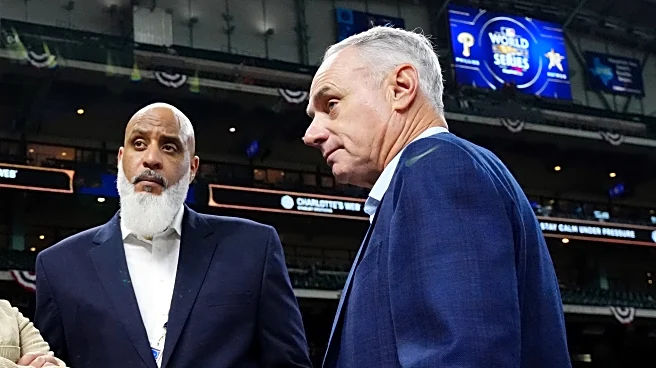
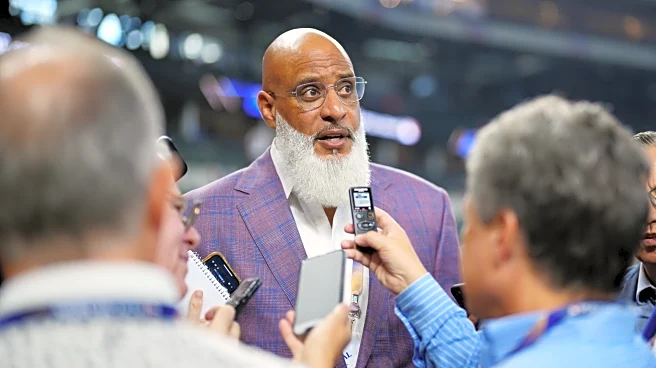
Tony Clark, the executive director of the Major League Baseball Players Association (MLBPA), has resigned from his position amid an ongoing investigation by the Eastern District of New York. The investigation, which began last summer, is focused on the improper use of licensing money and Clark's alleged inappropriate relationship with his sister-in-law, who was hired by the union in 2023. Clark, who has been in his role since 2013, resigned just months before a potential lockout and the expiration of the current collective bargaining agreement (CBA) in December. The MLBPA confirmed his resignation, emphasizing the union's commitment to fighting for players' rights. The union's executive board met to discuss next steps, as the investigation also
involves the union's use of OneTeam Partners and Players Way, a youth baseball initiative.
Why It's Important?
Clark's resignation comes at a critical time for the MLBPA, as the union is preparing for negotiations on a new CBA. The current agreement expires at the end of the upcoming season, and there are significant differences between the union and team owners, particularly regarding the potential introduction of a salary cap. Clark has been a staunch opponent of a salary cap, arguing it would not benefit the sport's competitive balance. His departure could impact the union's negotiating strategy and the outcome of the CBA talks. The investigation into the misuse of funds and nepotism allegations could also affect the union's credibility and bargaining power.
What's Next?
The MLBPA will need to elect a new executive director, a process that could influence the ongoing CBA negotiations. The union's ability to maintain solidarity and effectively represent players' interests during this transition will be crucial. The investigation's findings could lead to further scrutiny of the union's financial practices and governance. As the December deadline for the new CBA approaches, both the union and MLB owners will need to address key issues, including the proposed salary cap, to avoid a potential lockout.