
What's Happening?
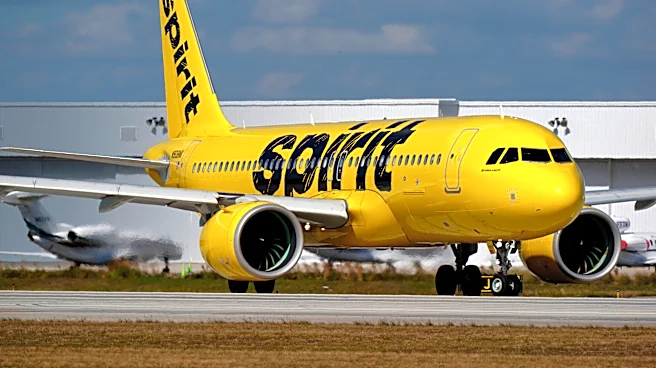
Spirit Airlines has permanently ceased operations, effective May 2, 2026, after failing to secure a $500 million bailout from the Trump administration. The airline's financial struggles, exacerbated by
high jet fuel costs due to the conflict in Iran, led to this decision. Thousands of passengers were left stranded, and major disruptions occurred at Spirit hubs like Orlando and Fort Lauderdale. The shutdown affects 17,000 employees, including direct and indirect staff. Spirit's CEO, Dave Davis, expressed disappointment over the outcome, highlighting the airline's role in making travel more accessible over the past 30 years.
Why It's Important?
The closure of Spirit Airlines is a significant blow to the U.S. travel industry, particularly affecting budget-conscious travelers who relied on Spirit's low-cost options. The reduction in competition is likely to drive up airfares, as fewer budget airlines remain to offer competitive pricing. This could disproportionately impact regions where Spirit was a major player, such as South Florida. The situation also highlights the challenges airlines face in maintaining financial stability amid volatile fuel prices and geopolitical tensions. The loss of jobs adds to the economic strain on affected communities and underscores the broader implications of airline industry vulnerabilities.
What's Next?
Passengers with canceled flights are advised to seek alternative travel options and keep all booking records for potential claims. The National Consumers League recommends monitoring accounts for refunds and exploring travel insurance options. The bankruptcy process will determine the extent of refunds for those who used vouchers or points. Other airlines may step in to fill the gap left by Spirit, but this will take time. The situation may prompt discussions on the need for more resilient financial strategies for airlines to withstand economic shocks.