




What's Happening?
Accenture Ventures has made a strategic investment in General Robotics, a startup that offers a GRID platform designed to unify AI intelligence across various industrial robots from different manufacturers. This investment is part of Accenture's broader
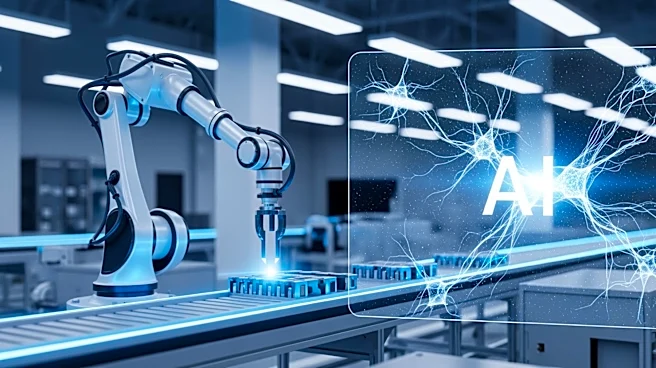
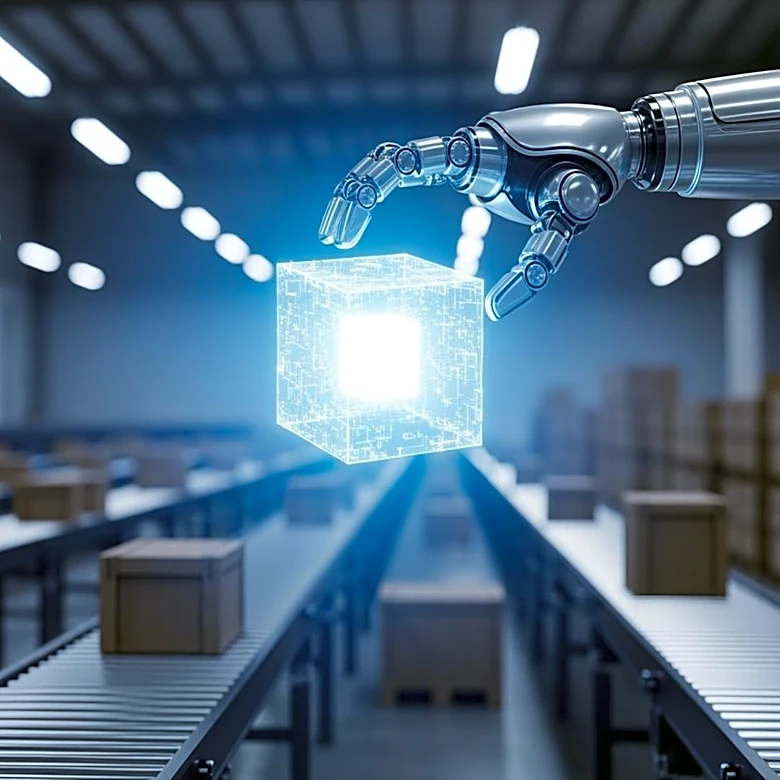
strategy to leverage physical AI in manufacturing, aiming to streamline automation processes. The GRID platform provides a common orchestration framework that allows manufacturers to deploy AI-driven tasks across their robot fleets without the need for individual programming for each machine. This approach addresses the current fragmentation in factories, where robots from multiple vendors require different software stacks and integration requirements, making scaling automation costly and slow. General Robotics' platform promises to abstract the hardware layer, enabling AI skills to move between robots similarly to how software applications move between operating systems.
Why It's Important?
The investment in General Robotics is significant for the manufacturing sector, which faces workforce constraints and increasing pressure to enhance productivity. By providing a unified AI intelligence layer, the GRID platform can potentially reduce costs and improve efficiency in factories. This development is particularly relevant as the physical AI market is projected to grow significantly, with expectations to reach over $15 billion by 2032. Accenture's involvement positions it as a key player in integrating AI-driven automation in industrial settings, offering enterprise-grade robotics intelligence at scale. The ability to deploy AI skills across different robots without rewriting code could revolutionize how manufacturers approach automation, making it more accessible and cost-effective.
What's Next?
Accenture's investment in General Robotics is expected to drive further integration of AI in manufacturing, with potential expansions into other sectors. The success of this initiative will depend on the platform's ability to demonstrate value that exceeds the switching costs for manufacturers currently locked into proprietary ecosystems. Accenture's consulting relationships provide a distribution channel that could facilitate adoption, but the technology must prove its effectiveness on factory floors. As the physical AI sector continues to grow, companies that can bridge the gap between simulation and real-world performance will likely capture significant market share.
Beyond the Headlines
The investment highlights the ongoing challenge of interoperability in the robotics industry, where manufacturers have strong incentives to maintain proprietary ecosystems. The GRID platform's ability to abstract the hardware layer could disrupt these ecosystems, offering manufacturers a more flexible and efficient approach to automation. However, the capital intensity of training robotic AI skills and deploying them in physical environments remains a significant hurdle. The success of this initiative will depend on overcoming these challenges and demonstrating reliable performance in complex, real-world settings.