







What's Happening?
In the Boston Celtics' first-round series against the Philadelphia 76ers, Jayson Tatum played his second-most minutes of the season in Game 6, which ended in a 113-97 loss. Tatum, who had recently returned from an Achilles injury, experienced knee tightness
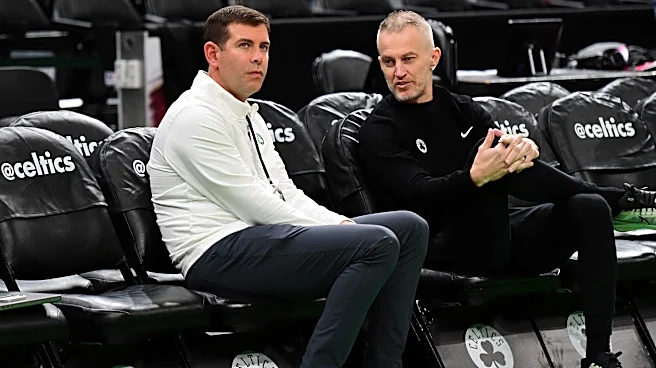
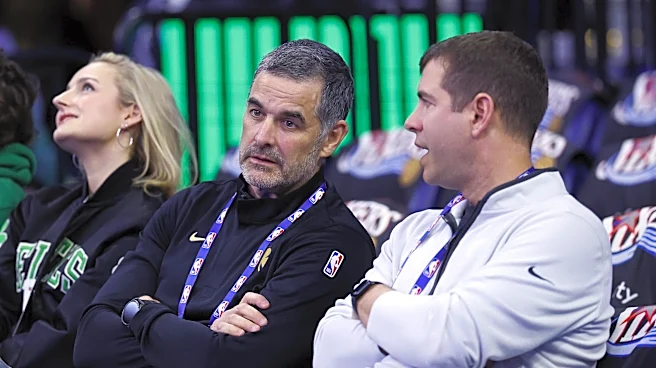
that prevented him from playing in Game 7. Celtics President of Basketball Operations, Brad Stevens, expressed uncertainty about whether Tatum's increased minutes contributed to his knee stiffness. Despite efforts to manage Tatum's workload, his absence in Game 7 led to the Celtics' earliest postseason exit since 2021. Stevens praised the medical staff for their efforts but acknowledged the need for a thorough review of Tatum's minutes.
Why It's Important?
Tatum's absence in Game 7 highlights the challenges of managing player health and workload in professional sports. The Celtics' early playoff exit underscores the impact of injuries on team performance and postseason success. This situation raises questions about the balance between preparing players for high-stakes games and ensuring their long-term health. The outcome may influence how teams approach player recovery and minutes management, potentially affecting strategies across the NBA. The Celtics' need to reassess their approach could lead to changes in their roster and medical protocols, impacting their future competitiveness.
What's Next?
As the Celtics enter the offseason, they will likely evaluate their roster and consider potential changes to improve their performance. Tatum will have time to recover and address his knee issues, while the team's management will assess the effectiveness of their medical and training strategies. The Celtics may explore trades or acquisitions to strengthen their lineup, particularly in light of Tatum's health concerns. The team's decisions in the coming months will be crucial in shaping their prospects for the next season.