


What's Happening?
Michael Pollan's latest book, 'A World Appears,' delves into the complexities of human consciousness by examining scientific, philosophical, and psychedelic perspectives. In a discussion with NPR's Here & Now, Pollan shared insights from his research,
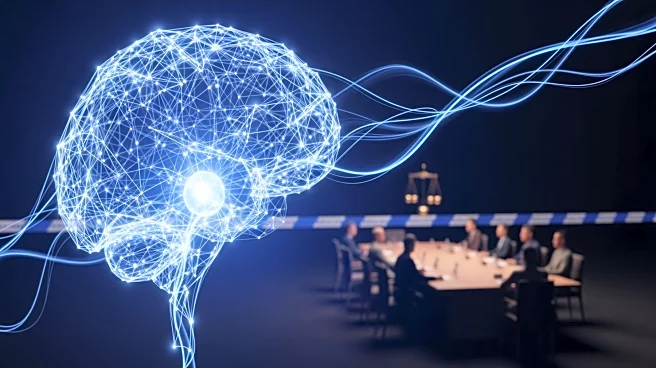
which was partly inspired by a personal experience with mushrooms in his garden. The book explores the concept of consciousness in plants and animals, contrasting it with human consciousness. Pollan also critiques the use of computers as metaphors for the human brain, arguing that artificial intelligence cannot achieve true consciousness. The book aims to broaden the understanding of consciousness by integrating diverse viewpoints and challenging conventional metaphors.
Why It's Important?
Pollan's exploration of consciousness is significant as it challenges existing paradigms and encourages a multidisciplinary approach to understanding the mind. By questioning the limitations of AI and the computer metaphor, Pollan invites readers to reconsider how consciousness is defined and studied. This has implications for fields such as neuroscience, psychology, and artificial intelligence, potentially influencing future research directions. Additionally, by incorporating perspectives from nature and psychedelics, Pollan's work may inspire new methodologies and frameworks for studying consciousness, ultimately contributing to a deeper understanding of the human experience.