




What's Happening?
The Chinese government has mandated that Meta unwind its acquisition of Manus, an AI startup known for developing autonomous agents. This decision was announced by China's National Development and Reform Commission, which oversees economic policymaking.
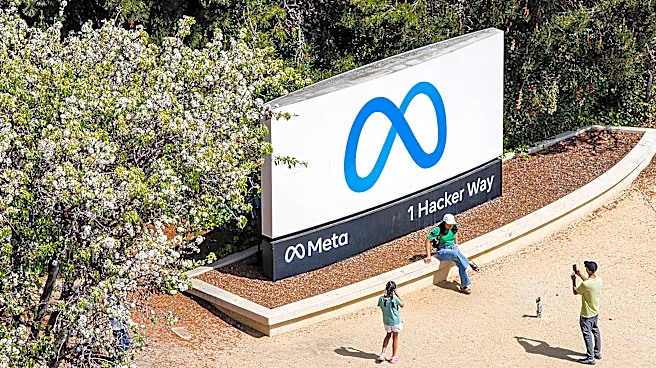
Meta had initially announced its intention to acquire Manus in December for $2 billion, aiming to integrate general-purpose AI agents into its products. Manus, originally founded in China, relocated to Singapore in mid-2025. The startup gained attention for its AI agent capable of performing tasks like stock analysis and job candidate screening. Despite the acquisition, Meta stated that Manus would have no ties to China. The unwinding process remains unclear, especially since Manus has already integrated with Meta's advertising management tools.
Why It's Important?
This development is significant for Meta as it seeks to expand its AI capabilities. The acquisition of Manus was a strategic move to embed AI agents into popular applications like Instagram and WhatsApp. The AI industry is rapidly evolving, with a focus on AI agents that can perform complex tasks. Manus's technology, which operates on models from other companies like Anthropic's Claude, offered Meta a ready-made platform without the need to develop its own underlying model. This acquisition was also expected to boost Meta's revenue, as Manus reported over $100 million in annual recurring revenue. The unwinding of this deal could hinder Meta's efforts to transform into an 'AI-native' company, relying more on AI agents for various tasks.
What's Next?
The next steps for Meta involve navigating the unwinding process, which could be complex given the existing integrations between Manus and Meta's tools. Meta will need to reassess its strategy for incorporating AI agents into its products without Manus. The company may explore alternative partnerships or acquisitions to fill the gap left by Manus. Additionally, Meta will likely engage with Chinese authorities to seek a resolution or clarification on the decision. The outcome of this situation could influence Meta's future investments and partnerships in the AI sector, particularly in regions with stringent regulatory environments.