






What's Happening?
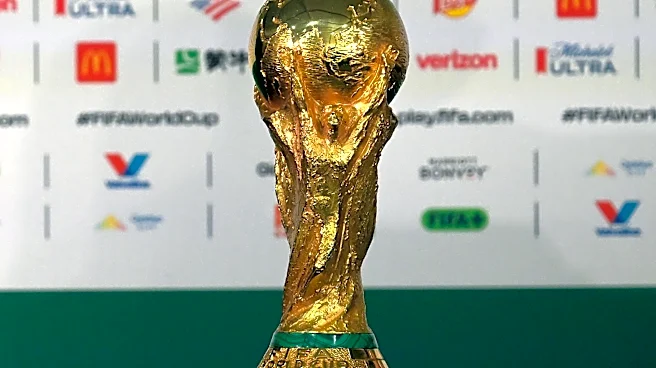
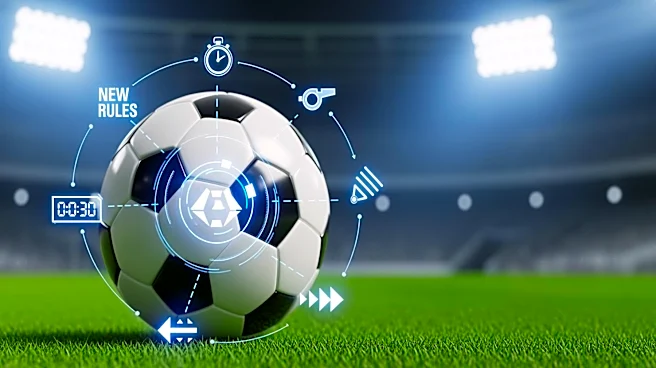
The 2026 FIFA World Cup, set to be hosted across the USA, Canada, and Mexico, will introduce several new rules and features aimed at enhancing the game. The tournament will expand to include 48 teams, organized into 12 groups of four, with 32 teams advancing
to the knockout stages. Key changes include the introduction of cooling-off breaks, expanded use of Video Assistant Review (VAR), and new tiebreaker rules. These changes are designed to improve the flow of the game and ensure fair play. The tournament will also feature a new system for managing yellow and red cards, with accumulated yellow cards being wiped clean after the group stage and quarterfinals.
Why It's Important?
The changes for the 2026 World Cup reflect FIFA's ongoing efforts to modernize the game and address issues such as time-wasting and inconsistent officiating. The expansion to 48 teams allows for greater global representation and increases the competitive nature of the tournament. The use of VAR and cooling-off breaks aims to enhance the accuracy of officiating and player welfare, respectively. These innovations are expected to make the World Cup more engaging for fans and fairer for players, potentially setting new standards for international football competitions.
What's Next?
As the World Cup approaches, teams and officials will need to adapt to the new rules and features. Training and preparation will likely focus on understanding and implementing these changes effectively. The success of these innovations will be closely monitored, with potential implications for future tournaments. Stakeholders, including players, coaches, and fans, will be watching to see how these changes impact the overall experience and outcomes of the matches.