


What's Happening?
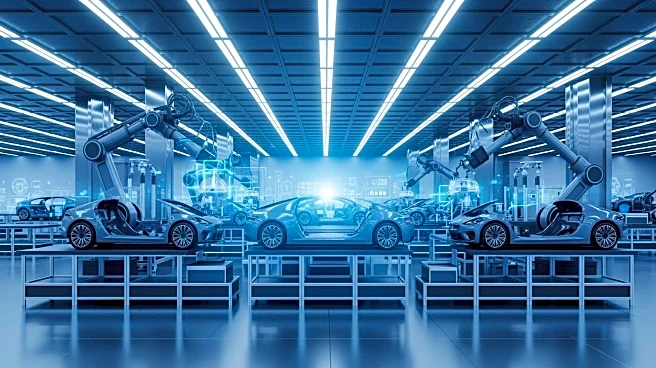
Elon Musk, CEO of Tesla Inc., announced plans to expand the company's human workforce as advancements in artificial intelligence and robotics increase productivity. During the Abundance Summit, Musk stated that Tesla would not be implementing layoffs,
emphasizing that the output per human at Tesla is expected to rise significantly. Musk also predicted economic deflation due to the output of goods and services surpassing the money supply. Despite Musk's optimistic outlook, critics like Sen. Bernie Sanders have raised concerns about the feasibility of a universal high income in the absence of entry-level jobs, which are being affected by AI advancements. The tech industry is experiencing significant layoffs as companies integrate AI, with Block Inc. and Atlassian Corp. announcing substantial workforce reductions. Lawmakers, including Sen. Mark Kelly, have expressed concerns about AI's impact on the American workforce and have proposed initiatives to protect jobs.
Why It's Important?
The expansion of Tesla's workforce amid AI and robotics advancements highlights the potential for increased productivity without reducing human employment. Musk's prediction of universal high income and economic deflation suggests a transformative impact on economic structures. However, the broader tech industry's layoffs due to AI integration raise concerns about job security and the future of entry-level positions. These developments could influence public policy and workforce strategies, as lawmakers and industry leaders navigate the balance between technological progress and employment stability. The situation underscores the need for strategic planning to mitigate potential negative impacts on the workforce and ensure equitable economic growth.
What's Next?
As Tesla expands its workforce, the company may continue to leverage AI and robotics to enhance productivity. The broader tech industry may face ongoing challenges related to workforce reductions, prompting further discussions among lawmakers and industry leaders about the implications of AI integration. Sen. Mark Kelly's AI for America roadmap could lead to policy initiatives aimed at protecting jobs and supporting workers affected by technological advancements. The debate over universal high income and economic deflation may continue, influencing economic policy and discussions about the future of work.
Beyond the Headlines
The integration of AI and robotics in the workforce raises ethical and cultural questions about the value of human labor and the role of technology in society. The potential for universal high income challenges traditional economic models and could lead to shifts in societal norms and expectations. As companies and policymakers address these issues, considerations about equity, access to opportunities, and the distribution of wealth may become increasingly important. The long-term implications of these developments could reshape the workforce and economic landscape, requiring adaptive strategies and innovative solutions.