
What's Happening?
Amid ongoing disruptions in the Middle East, particularly affecting the Strait of Hormuz, several Asian countries have increased their reliance on U.S. crude oil imports. According to data from Kpler,
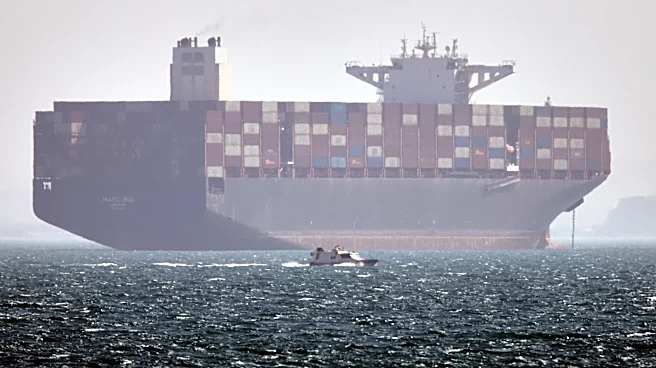
U.S. crude exports reached a record high of 5.2 million barrels per day in April, marking a significant increase from 3.9 million barrels per day in February. This surge is largely attributed to the near-blockade of routes into the Persian Gulf, prompting Asian countries to seek alternative sources of crude oil. However, analysts suggest that this shift is likely a temporary response to the conflict rather than a permanent change in trade patterns. The U.S. exports primarily light, sweet crude, which does not fully substitute the heavier, high-sulfur crude from the Middle East, as many Asian refineries are optimized for processing heavier grades.
Why It's Important?
The increased U.S. crude exports highlight the global oil market's vulnerability to geopolitical tensions, particularly in the Middle East. The reliance on U.S. oil by Asian countries underscores the strategic importance of maintaining stable supply routes and the potential economic impacts of regional conflicts. For the U.S., this surge in exports presents both opportunities and challenges. While it boosts the U.S. oil industry, infrastructure constraints limit the capacity to sustain such high export levels. Additionally, the conflict-induced volatility in oil prices is affecting various sectors, notably the automotive industry. Major automakers in Detroit have warned of significant cost increases due to rising raw material prices, including aluminum and DRAM memory chips, which could lead to a $5 billion cost impact.
What's Next?
As the situation in the Middle East evolves, the global oil market will continue to monitor the stability of supply routes and the potential for further disruptions. U.S. oil producers may need to address infrastructure limitations to capitalize on increased demand. Meanwhile, automakers face the challenge of managing rising costs, which may eventually be passed on to consumers. The industry will need to balance price adjustments with maintaining competitive sales volumes. The broader economic implications of sustained high oil prices could also influence policy decisions and international trade dynamics.