


What's Happening?
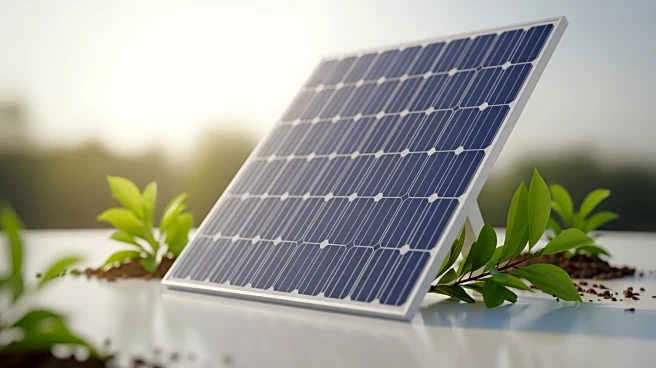
A study led by Northumbria University outlines a sustainable approach to expanding solar manufacturing to terawatt scales. Published in Nature Communications, the research examines the life cycle of silicon photovoltaic technology, emphasizing the need for scalable and environmentally friendly growth. The study highlights how advances in solar cell efficiency and manufacturing practices can significantly reduce environmental impacts, including greenhouse gas emissions. It suggests that decarbonizing global power systems during production could prevent up to 8.2 gigatonnes of CO2-equivalent emissions. The research also identifies the importance of using alternative materials to reduce critical mineral depletion, as current technologies increase
silver use in solar cells.
Why It's Important?
This research is crucial as it addresses the dual challenge of meeting rising electricity demand while minimizing environmental impacts. As solar power becomes a major component of global electricity generation, ensuring its sustainability is vital for achieving climate goals. The study's findings could guide policymakers and industry leaders in making informed decisions about solar manufacturing practices, potentially leading to significant reductions in carbon emissions. By focusing on the entire supply chain, the research underscores the importance of a holistic approach to sustainability in the energy sector.
What's Next?
The study suggests that by 2035, solar panels could avoid at least 25 gigatonnes of CO2 emissions compared to conventional power generation. To achieve this, the solar industry must focus on improving manufacturing practices and decarbonizing electricity used in production. The research calls for innovation in alternative materials to reduce reliance on critical minerals like silver. As the industry scales up, collaboration between research institutions, governments, and manufacturers will be essential to implement these sustainable practices and maximize the environmental benefits of solar technology.