



What's Happening?
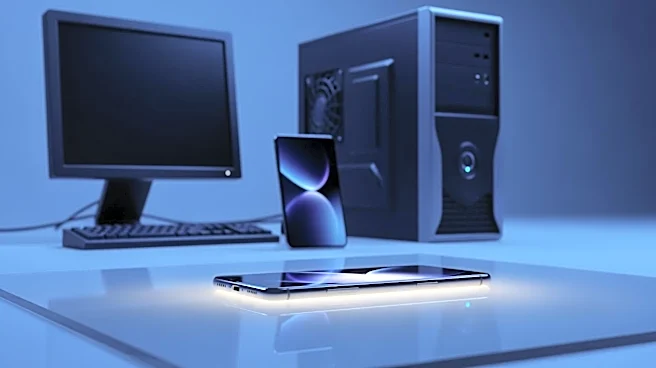
Keith Rabois, a prominent Silicon Valley executive, has publicly shared his preference for using mobile devices over traditional laptops and desktops. In a recent podcast, Rabois explained that he has relied on smaller, more portable devices like smartphones
and tablets since 2010. This shift aligns with a broader trend in Silicon Valley, where advancements in AI tools have enabled more work to be conducted on mobile platforms. Rabois's approach reflects a growing movement towards mobile-first computing, driven by the convenience and flexibility of mobile devices.
Why It's Important?
Rabois's stance highlights a significant shift in how technology is utilized in professional settings, with potential implications for the future of computing. As mobile devices become more capable and integrated with AI technologies, they offer an alternative to traditional computing setups, particularly for on-the-go professionals. This trend could influence the development of new software and applications optimized for mobile platforms, as well as impact the sales and design of traditional computers. The shift towards mobile-first computing may also drive innovation in mobile device capabilities and user interfaces.