
What's Happening?
Varda Space Industries successfully completed its sixth reentry mission on May 18, 2026, as part of its ongoing efforts to support both hypersonic testing and pharmaceutical research. The mission, funded
by the Air Force Research Laboratory's Prometheus program, aimed to test hypersonic technology using commercial spacecraft. The capsule, which reentered on May 20 and landed at the Koonibba Test Range in South Australia, was launched on the SpaceX Transporter-16 rideshare mission on March 30. Key investigations during the mission included testing autonomous navigation during reentry by observing stars and low Earth orbit satellites, and collecting data with temperature sensors embedded in the capsule's nose. Additionally, the capsule carried two instrumented tiles provided by NASA, made using new production techniques.
Why It's Important?
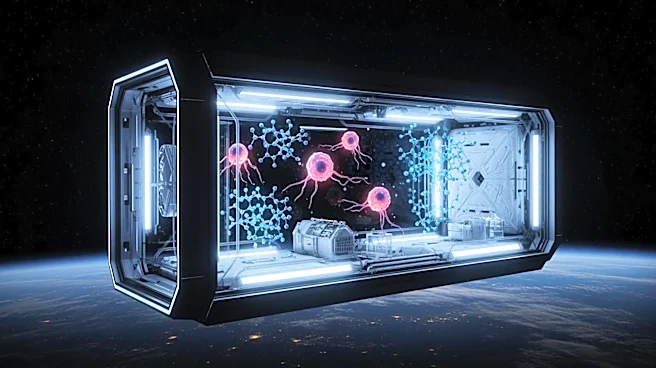
The successful completion of Varda's sixth mission highlights the company's innovative approach to hypersonic testing and pharmaceutical research. By offering a cost-effective alternative to traditional missile or rocket testing, Varda is positioning itself as a leader in the hypersonics market. The data collected from these missions could significantly accelerate research and development in both defense and commercial sectors. Furthermore, Varda's collaboration with United Therapeutics to study drug formulations in microgravity could revolutionize the pharmaceutical industry. If successful, this partnership could lead to the development of new, more effective drugs, potentially transforming how certain diseases are treated.
What's Next?
Varda plans to continue its dual focus on hypersonic testing and pharmaceutical research. The company has announced an agreement with United Therapeutics to begin studying drug formulations in microgravity, with the first drug expected to fly in 2027. If these efforts yield positive results, clinical testing could begin as early as 2030. This timeline suggests that microgravity-enabled pharmaceuticals could become a reality by 2030 to 2035, potentially leading to a new era in drug development. Varda's continued success in these areas could solidify its position as a key player in both the space and pharmaceutical industries.
Beyond the Headlines
Varda's approach to combining space technology with pharmaceutical research represents a significant shift in how industries can leverage space for commercial benefits. The potential success of microgravity-enabled pharmaceuticals could open new avenues for drug development, offering treatments that are not possible under Earth's gravity. This could lead to a broader acceptance and integration of space-based research in various scientific fields, ultimately expanding the commercial space industry's impact on everyday life.