



What's Happening?
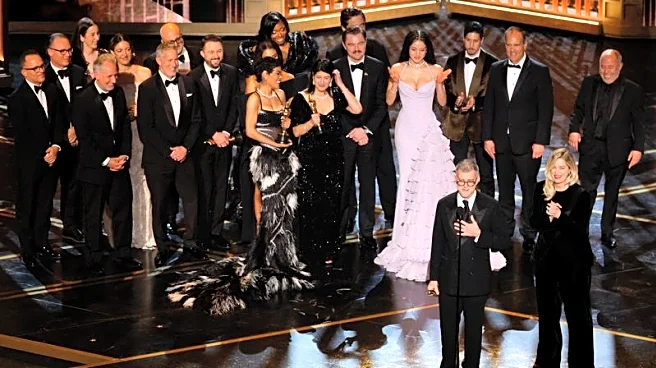
At the recent Academy Awards ceremony, the best live-action short film category resulted in a rare tie. The films "The Singers," directed by Sam A. Davis and produced by Jack Piatt, and "Two People Exchanging Saliva," directed by Natalie Musteata and Alexandre
Singh, both received the prestigious Oscar. The award was presented by comedian Kumail Nanjiani, who humorously announced the tie, stating, "It's a tie. I'm not joking. It's actually a tie." This event marks only the seventh tie in the history of the Academy Awards. Previous ties include the best sound editing award in 2013, shared by "Zero Dark Thirty" and "Skyfall," and the best feature documentary award in 1987, shared by "Artie Shaw: Time is All You've Got" and "Down and Out in America."
Why It's Important?
The occurrence of a tie at the Oscars is a rare event, highlighting the competitive nature and high caliber of entries in the film industry. Such ties can bring increased attention to the films involved, potentially boosting their viewership and recognition. For filmmakers, sharing an Oscar can be both a unique honor and a testament to the quality of their work. This event also underscores the subjective nature of film awards, where multiple works can be equally deserving of recognition. The tie may encourage future filmmakers to strive for excellence, knowing that their work could stand alongside others in a shared victory.
What's Next?
Following the tie, both films are likely to experience increased interest from audiences and critics alike. The filmmakers may leverage this recognition to secure future projects or collaborations. Additionally, the Academy may review its voting procedures to ensure clarity and fairness in future award decisions. The tie could also spark discussions within the industry about the criteria for award selection and the possibility of more ties in the future.
Beyond the Headlines
The tie at the Oscars may prompt a broader conversation about the nature of artistic recognition and the value of shared accolades. It raises questions about how success is measured in creative fields and whether traditional award systems adequately reflect the diversity and richness of artistic expression. This event could inspire changes in how awards are structured, potentially leading to more inclusive and representative recognition of talent.