
What's Happening?
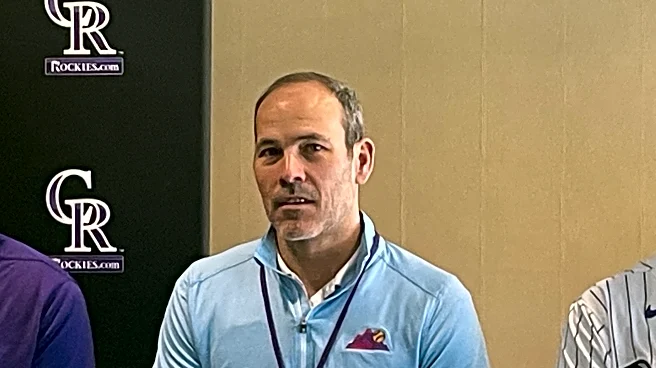
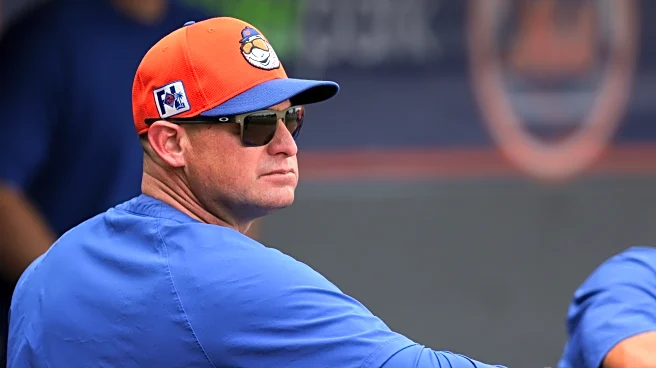
The Colorado Rockies have announced the hiring of Ian Levin as their new assistant general manager. Levin, who has a long history with the New York Mets, brings extensive experience in major league operations, research and development, and player development. His appointment is part of a broader effort by the Rockies to overhaul their management and improve their performance, following a series of disappointing seasons. The team has been criticized for lagging behind in data and analytics, which has contributed to their poor on-field results, including a record 119 losses in the most recent season. Levin's hiring follows the recent appointments of Paul DePodesta as president of baseball operations and Josh Byrnes as general manager, both of whom
have connections to Levin from previous roles.
Why It's Important?
The hiring of Ian Levin is significant as it marks a strategic shift for the Rockies, who are aiming to enhance their competitive edge through improved data analytics and player development. This move is crucial for the franchise, which has struggled with performance issues and is seeking to rebuild its reputation and success in Major League Baseball. By bringing in experienced leaders like Levin, DePodesta, and Byrnes, the Rockies are positioning themselves to better utilize modern baseball strategies and technologies, potentially leading to improved team performance and fan engagement. This could also influence other teams to reassess their own management strategies in response to the Rockies' new direction.
What's Next?
With the new management team in place, the Rockies are expected to focus on integrating advanced analytics into their decision-making processes. This may involve restructuring their scouting and player development departments to align with the latest industry practices. The team's performance in the upcoming seasons will be closely watched as a measure of the effectiveness of these changes. Additionally, the Rockies' approach could set a precedent for other teams facing similar challenges, potentially leading to a broader shift in how baseball franchises operate.