
What's Happening?
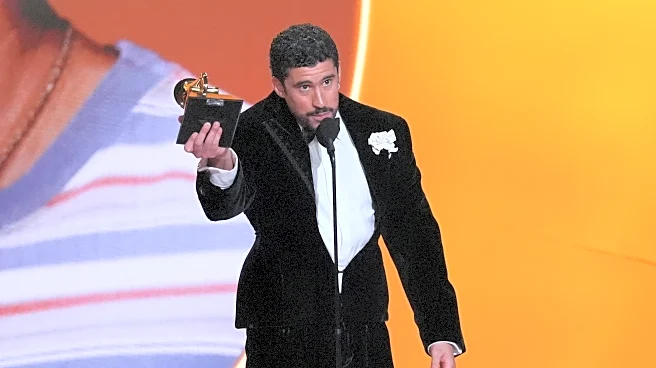
At the 2026 Grammy Awards, several music artists used the event as a platform to protest against the Trump administration's immigration policies and the actions of Immigration and Customs Enforcement (ICE). Notable figures such as Jason Isbell, Margo Price, Kehlani, and Rhiannon Giddens wore protest apparel on the red carpet. Kehlani, during her acceptance speech for best R&B performance, openly criticized ICE. Justin Vernon of Bon Iver highlighted the role of legal observers documenting federal agents' actions. This protest follows similar actions at other recent events like the Golden Globes and Sundance Film Festival, where celebrities wore 'ICE OUT' pins. The music industry, known for its rebellious culture, showed strong support for the protest,
reflecting a growing public backlash against federal immigration enforcement.
Why It's Important?
The protest at the Grammys underscores the intersection of entertainment and political activism, highlighting how artists are using their platforms to influence public discourse on immigration policies. This movement reflects broader societal tensions regarding immigration enforcement and the role of federal agencies like ICE. The artists' actions could potentially sway public opinion and increase pressure on policymakers to reconsider current immigration strategies. The involvement of high-profile celebrities brings significant attention to the issue, potentially mobilizing fans and the general public to engage in advocacy or activism. The protest also illustrates the challenges artists face when expressing political views, as they navigate industry pressures and potential backlash from corporate partners.
What's Next?
The ongoing protests by artists at major events suggest that political expression in the entertainment industry will continue to be a significant trend. As the Super Bowl approaches, with potential ICE presence at the halftime show, further protests or statements from artists could occur. The music industry may see increased activism, with artists leveraging their influence to advocate for policy changes. This could lead to more collaborations between artists and advocacy groups, aiming to address immigration issues. The response from political leaders and federal agencies to these protests will be crucial in shaping future discourse and policy decisions.