


What's Happening?
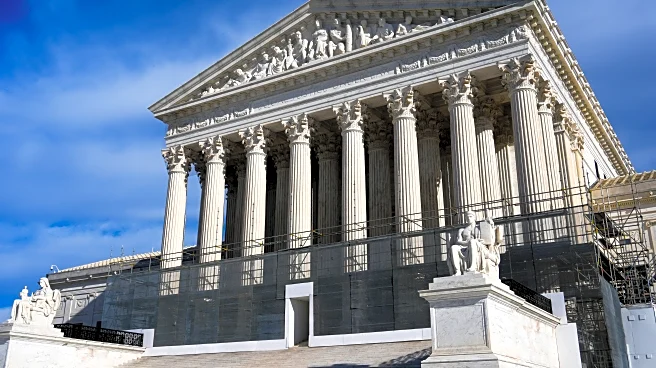
The US Supreme Court has struck down a significant portion of President Donald Trump's trade tariffs, which were initially imposed under a law intended for national emergencies. This decision marks a defeat for President Trump and introduces a new wave of uncertainty in global trade relations. While some businesses have welcomed the ruling after enduring lengthy legal battles, European trade groups and companies express concern that the decision could complicate trade relations further. The ruling has the potential to disrupt existing trade deals and create a freeze on orders as businesses await a clearer regulatory framework. The US is a major market for European exports, such as Italian wines, which could be affected by the ruling. Despite
the court's decision, President Trump has announced new global tariffs of 10% for an initial 150-day period, adding to the uncertainty.
Why It's Important?
The Supreme Court's decision to overturn Trump's tariffs is significant as it impacts global trade dynamics and the US's relationship with its trade partners. The ruling could lead to increased tensions between the US and major trading nations, potentially affecting industries reliant on stable trade agreements. Businesses that have adapted to the tariffs may face challenges as they navigate the new legal landscape. The uncertainty surrounding potential new tariffs and the lack of clarity on tariff refunds could hinder economic planning and investment. This development underscores the volatility in trade policies and the need for businesses to remain adaptable in a shifting regulatory environment.
What's Next?
Following the Supreme Court's ruling, businesses and trade groups are closely monitoring the US government's response, including the potential imposition of new tariffs. Companies are advised to prepare for continued uncertainty in trade relations and to consider strategies for mitigating risks associated with fluctuating tariffs. Political negotiations and efforts to de-escalate trade tensions may play a crucial role in shaping future trade policies. Stakeholders are likely to advocate for a more stable and predictable trade environment to support economic growth and international cooperation.