





What's Happening?
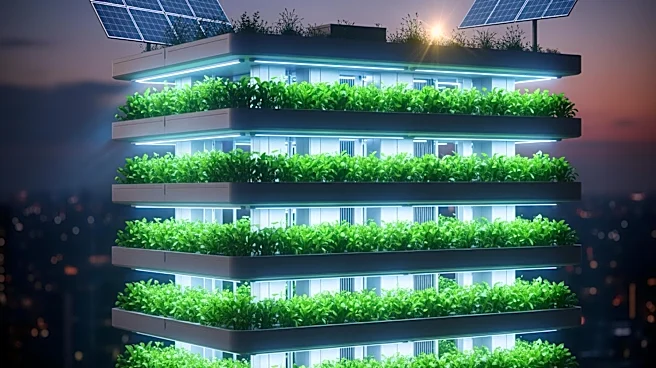
The global vertical farming market is projected to grow from $14.9 billion in 2026 to $75.9 billion by 2035, with a CAGR of 19.8%. This growth is fueled by the integration of AI and renewable energy, transforming vertical farming into a mainstream solution
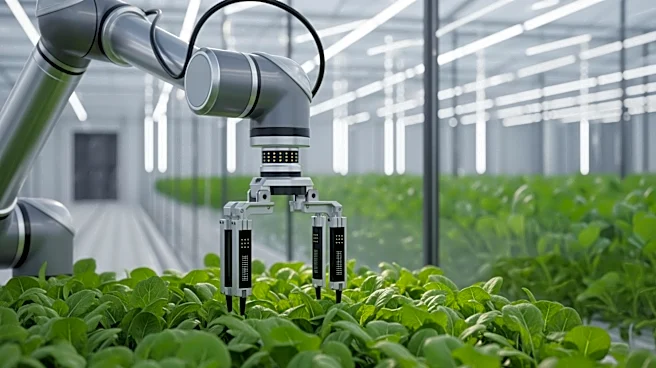
for urban food security and sustainable production. Vertical farms use hydroponics, aeroponics, and LED lighting to achieve year-round yields with minimal water usage. The market is seeing increased investment from major retailers and governments, moving from pilot projects to commercial-scale operations.
Why It's Important?
The rapid growth of the vertical farming market highlights a significant shift in agricultural practices towards more sustainable and efficient methods. The use of AI and renewable energy reduces operational costs and environmental impact, making vertical farming a viable alternative to traditional agriculture. This transition supports urban food security and resilience against climate change and supply chain disruptions. The market's expansion also presents opportunities for technological innovation and economic growth, particularly in urban areas.
What's Next?
As vertical farming continues to expand, further integration of AI and renewable energy is expected to enhance efficiency and reduce costs. The market will likely see increased collaboration between agritech firms and governments, promoting smart farming initiatives. The focus will be on scaling operations and improving technology to meet the growing demand for sustainable food production. This could lead to new business models and partnerships, driving further innovation in the industry.