



What's Happening?
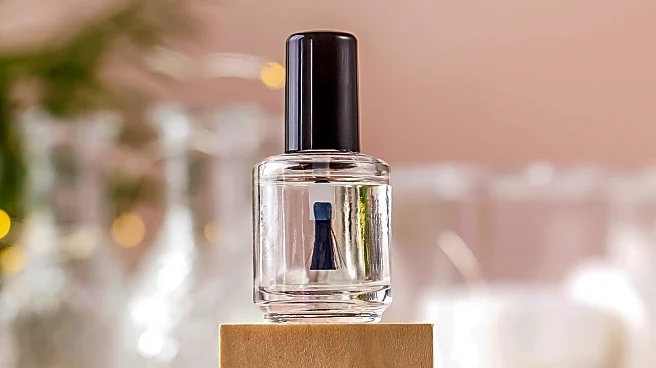
A team from Centenary College of Louisiana has developed a clear nail polish that allows individuals with long nails to use touchscreens more effectively. This innovation, led by undergraduate student Manasi Desai and her research advisor Joshua Lawrence,
aims to transform long fingernails into touchscreen-compatible styluses. The project was inspired by the challenges faced by people with long nails, such as a phlebotomist who struggled to use a smartphone. The team focused on creating a polish that is both clear and safe, avoiding the use of hazardous conductive materials like carbon nanotubes. Instead, they experimented with various additives, ultimately finding success with a combination of taurine and ethanolamine. While the polish is not yet ready for commercial use due to consistency issues and the quick evaporation of ethanolamine, the research marks a significant step forward in solving a common problem.
Why It's Important?
This development is significant as it addresses a practical issue faced by many individuals with long nails, enhancing their ability to interact with modern technology. The innovation could have a broad impact on the cosmetics industry by offering a new product that combines aesthetic appeal with functional benefits. Additionally, the research highlights the potential for chemistry to solve everyday problems, potentially leading to further advancements in consumer products. The project also underscores the importance of safety in product development, as the team prioritized non-toxic ingredients. If successful, this nail polish could become a popular accessory, benefiting both consumers and manufacturers by expanding the range of available cosmetic products.
What's Next?
The research team plans to continue refining the formula to improve its consistency and longevity. They aim to replace ethanolamine with a fully non-toxic alternative to enhance the polish's safety and effectiveness. Further testing and development are needed before the product can be commercialized. The team has submitted a provisional patent for their work, indicating potential future market entry. As the research progresses, it may attract interest from cosmetic companies looking to innovate and expand their product lines. The success of this project could also inspire similar initiatives in other areas of consumer technology.