







What's Happening?
McDonald's has reported a 9% increase in revenue for the first quarter, reaching $6.52 billion, surpassing Wall Street's expectations. The company's global same-store sales rose by 3.8%, slightly above the anticipated 3.7% increase. This growth is attributed
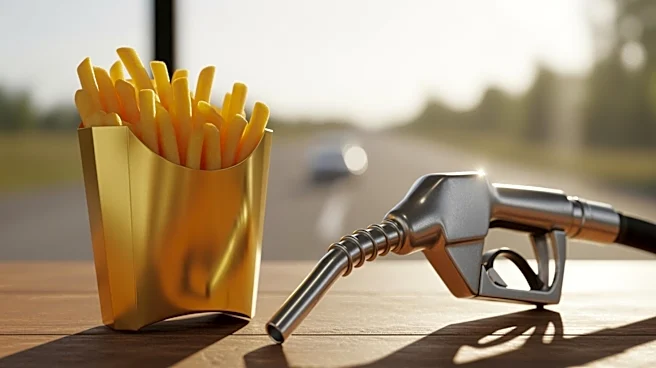
to strategic menu offerings, including limited-time items like the Big Arch burger, which gained viral attention. Despite these positive results, McDonald's CEO Chris Kempczinski expressed concerns about the impact of rising gas prices on consumer spending, particularly among lower-income customers. The average gas price in the U.S. has risen to $4.55 per gallon, a 44% increase from the previous year, which could affect sales in the coming months.
Why It's Important?
The performance of McDonald's is a significant indicator of consumer behavior and economic conditions, especially in the fast-food sector. The company's ability to attract customers with value meals and limited-time offerings highlights the importance of strategic pricing and marketing in maintaining sales momentum. However, the rising gas prices pose a challenge, as they disproportionately affect low-income consumers, potentially reducing their discretionary spending on dining out. This situation underscores the broader economic pressures faced by consumers and businesses alike, as inflation and energy costs continue to rise.
What's Next?
McDonald's plans to continue focusing on value offerings to attract budget-conscious consumers. The company has introduced a new beverage lineup in the U.S. to stimulate interest and sales. As gas prices remain high, McDonald's will need to monitor consumer sentiment and spending closely. The company's experience in international markets suggests that a combination of meal deals and low-priced items could be an effective strategy to maintain customer interest and sales. Stakeholders will be watching how McDonald's navigates these economic challenges and adapts its strategies to sustain growth.