









What's Happening?
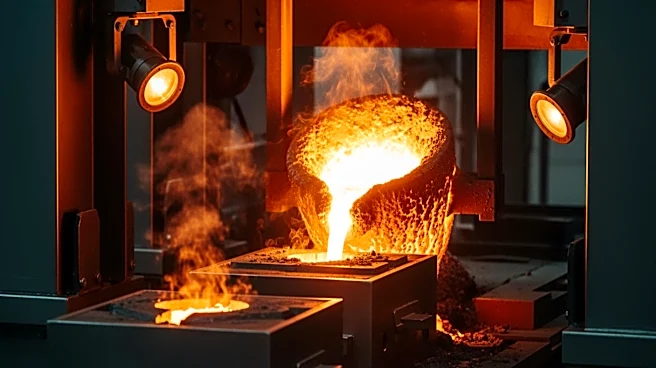
The University of New South Wales (UNSW) is spearheading a research initiative to reduce carbon emissions in steel manufacturing. The project, led by UNSW's Shen Lab, focuses on adapting existing blast furnace technology to operate with lower emissions through
a process called Renewable Injections-Sustainable Burdens (RISB). This initiative is part of the Australian Renewable Energy Agency's (ARENA) Iron and Steel Research and Development Funding Round, which aims to support the decarbonization of Australia's iron and steel sector. The RISB process involves integrating renewable injection materials and alternative burden materials into conventional blast furnace operations, potentially reducing the need for new production systems. The project seeks to maintain the use of Australia's lower-grade Pilbara iron ore while advancing towards net-zero emissions.
Why It's Important?
This project is significant as it addresses one of the largest industrial sources of greenhouse gas emissions globally—steel production. By developing a low-emission blast furnace ironmaking process, the initiative could help Australia transition to a lower-emissions industrial process, supporting the country's broader net-zero emissions goals. The research could also enhance the competitiveness of Australian iron ore in emerging low-emissions markets, providing economic benefits while contributing to global environmental efforts. The project's success could set a precedent for other countries looking to decarbonize their steel industries.
What's Next?
The project is currently focused on research and development activities to assess the technical feasibility of the RISB process. If successful, the process could be implemented using existing infrastructure, reducing the need for entirely new production systems. This could lead to broader adoption of the technology within the steel industry, potentially influencing global steel manufacturing practices. Continued investment and support from ARENA and other stakeholders will be crucial in advancing the project's goals and achieving significant emissions reductions in the steel sector.