


What's Happening?
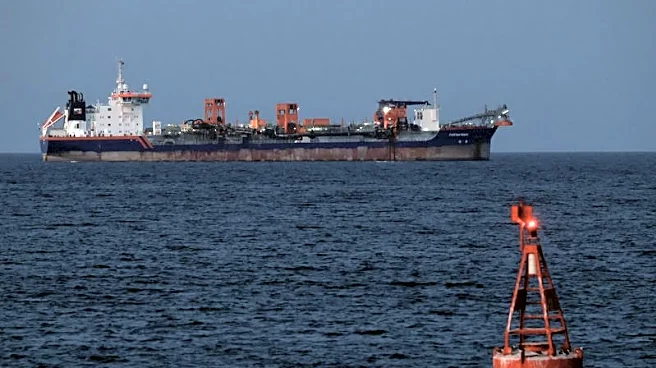
Oil markets are experiencing cautious optimism as President Trump signals a potential de-escalation of the conflict affecting the Strait of Hormuz. The closure of this critical waterway has led to significant production cuts by Middle Eastern oil producers,
including Saudi Arabia, Iraq, and Kuwait. These nations have collectively reduced output by 6.7 million barrels per day, with Iraq making the largest cut. Despite the ongoing crisis, Trump's indications of winding down the conflict have helped stabilize oil prices, which had surged due to the blockade.
Why It's Important?
The Strait of Hormuz is a vital chokepoint for global oil supply, and its closure has significant implications for international energy markets. The production cuts and potential supply disruptions have raised concerns about global oil prices and economic stability. President Trump's efforts to calm the markets are crucial in preventing further price spikes and ensuring a steady supply of oil. The situation underscores the interconnectedness of geopolitical events and energy markets, highlighting the need for strategic responses to maintain stability.
What's Next?
As the situation in the Strait of Hormuz evolves, stakeholders will be closely watching for further developments. The potential for a resolution to the conflict could lead to a reopening of the waterway and a normalization of oil flows. However, continued tensions may prompt additional measures from oil-producing nations and international bodies to mitigate the impact on global markets. The U.S. and its allies will likely continue diplomatic efforts to address the crisis and ensure energy security.