





What's Happening?
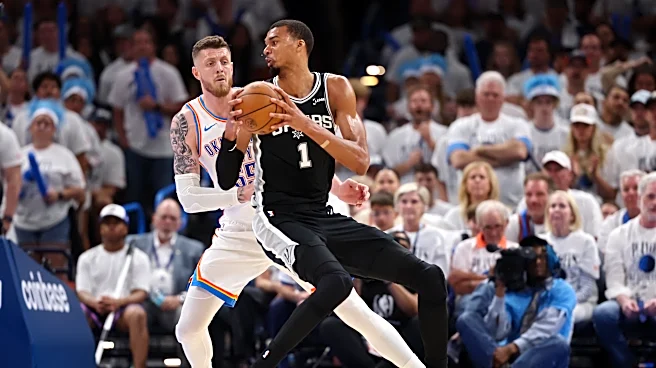
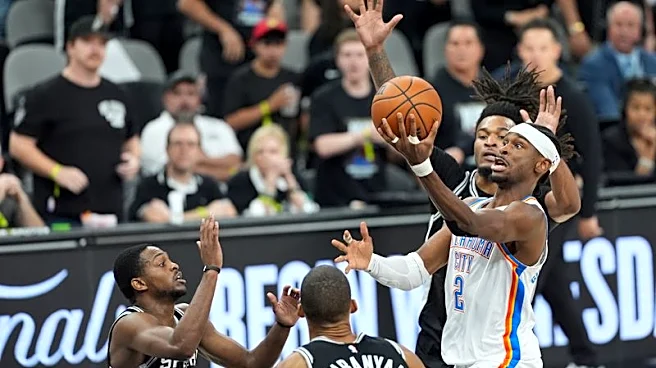
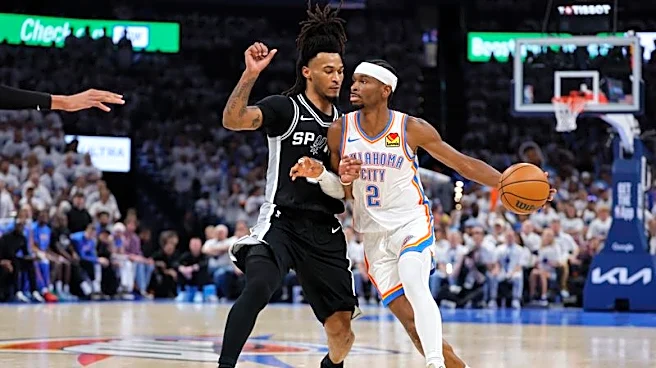
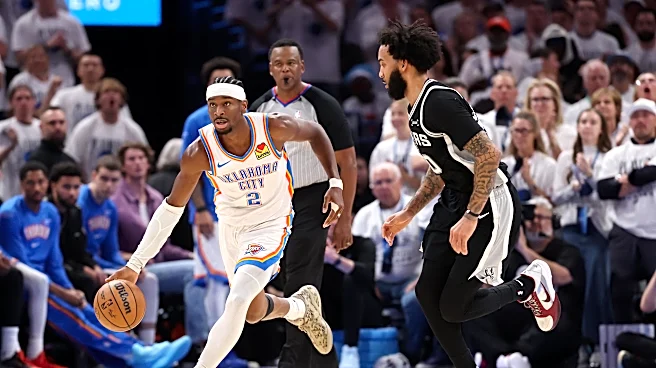
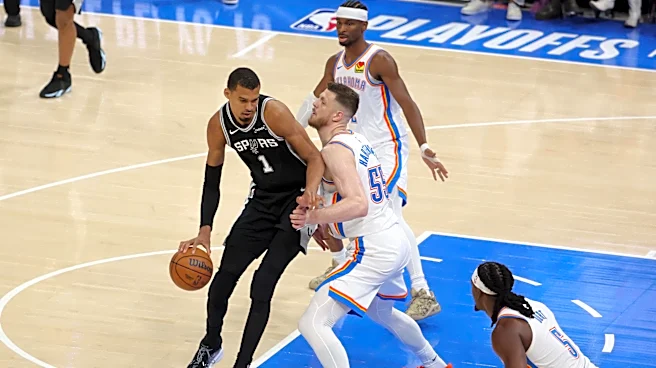
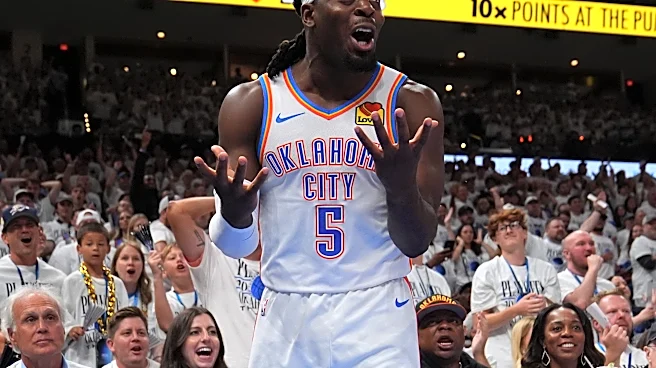
The Oklahoma City Thunder are on the brink of reaching the NBA Finals as they prepare to face the San Antonio Spurs in Game 6 of the Western Conference Finals. The game is set to take place at the Frost Bank Center, with the Thunder leading the series.
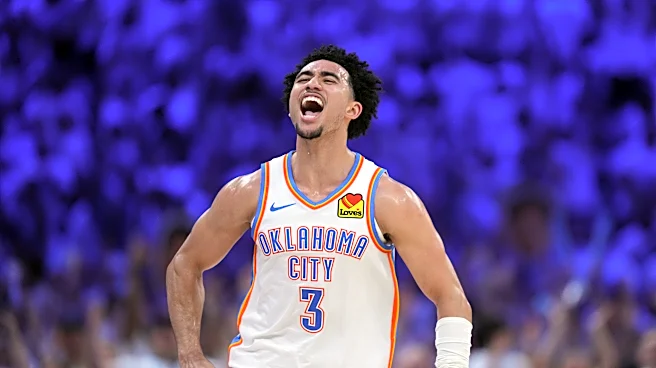
Oklahoma City secured a 127-114 victory in Game 5, despite missing key players Jalen Williams and Ajay Mitchell. Williams, who has been dealing with a hamstring injury, is listed as questionable for Game 6, while Mitchell remains out. The Thunder's Shai Gilgeous-Alexander, despite a challenging shooting night, contributed significantly with 32 points. The Spurs, led by Victor Wembanyama, are looking to extend the series to a seventh game. The Thunder have shown resilience, bouncing back from a low-scoring Game 4 to maintain a strong offensive presence.
Why It's Important?
This matchup is crucial as it determines whether the Thunder will advance to the NBA Finals. A win for Oklahoma City would mark a significant achievement, showcasing their ability to overcome injuries and maintain competitive performance. For the Spurs, extending the series would demonstrate their resilience and potential to challenge top teams. The outcome of this game has implications for both teams' future strategies and player dynamics. The Thunder's ability to perform under pressure, especially with key players potentially sidelined, highlights their depth and adaptability. The Spurs' performance will be closely watched as they attempt to leverage their home-court advantage and experience in high-stakes games.
What's Next?
If the Thunder win, they will advance to the NBA Finals, setting the stage for a potential championship run. A Spurs victory would force a decisive Game 7, adding further intensity to the series. Both teams will need to strategize effectively, considering player health and performance. The Thunder will focus on maintaining their offensive momentum, while the Spurs will aim to capitalize on their rebounding advantage and home-court support. The outcome will influence offseason decisions, including player trades and contract negotiations, as both teams evaluate their rosters and future prospects.