



What's Happening?
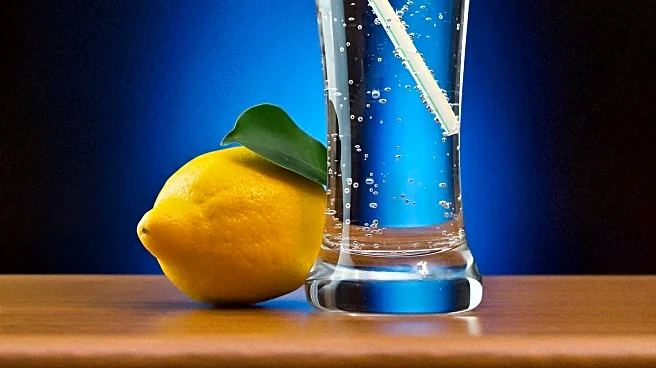
Registered dietitians have analyzed the health effects of consuming sparkling water daily, highlighting its benefits and potential drawbacks. Sparkling water, which is simply water infused with carbon dioxide, can be a healthier alternative to sugary
sodas and juices. It offers hydration without added calories or sugar, and some varieties contain minerals like calcium and magnesium, which support hydration, bone health, and nerve function. However, the mineral content is minimal and not a substitute for nutrients obtained from food. While sparkling water is generally safe, it may cause bloating or mild enamel wear for some individuals. The carbonation can also help some people feel fuller, potentially aiding in weight management. Despite these benefits, excessive consumption of flavored sparkling waters with added sugars can contribute to health issues like inflammation.
Why It's Important?
The growing popularity of sparkling water reflects a shift towards healthier beverage choices among consumers. As people seek alternatives to sugary drinks, understanding the health implications of sparkling water is crucial. For those looking to reduce alcohol or soda intake, sparkling water offers a festive and satisfying option. It can also support hydration, which is essential for overall health. However, consumers should be aware of potential dental and digestive issues associated with carbonation. The trend towards sparkling water highlights a broader movement towards health-conscious consumption, impacting beverage industry trends and consumer habits.
What's Next?
As the demand for healthier beverage options continues to rise, the beverage industry may see increased innovation in sparkling water products, including new flavors and formulations that address consumer health concerns. Dietitians may continue to educate the public on the benefits and potential drawbacks of sparkling water, guiding consumers in making informed choices. Additionally, further research into the long-term health effects of sparkling water consumption could provide more insights, influencing both consumer behavior and product development.
Beyond the Headlines
The shift towards sparkling water consumption may have broader implications for public health and the beverage industry. As consumers become more health-conscious, there could be a decline in the sales of traditional sugary sodas, prompting companies to diversify their product lines. This trend also reflects a cultural shift towards wellness and preventive health measures, as individuals seek to make healthier lifestyle choices. The emphasis on hydration and reduced sugar intake aligns with public health initiatives aimed at combating obesity and related health issues.