

What's Happening?
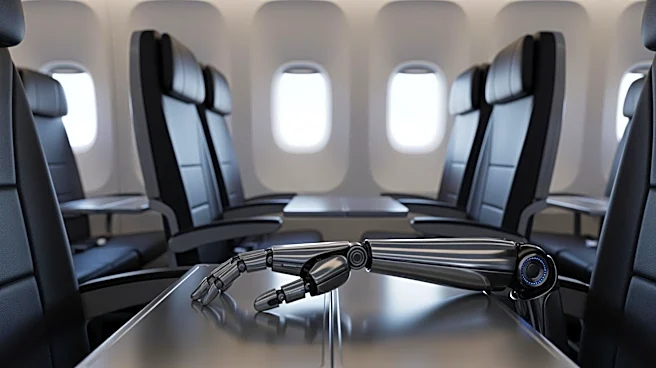
Southwest Airlines has updated its travel policy to ban humanoid robots from both the cabin and checked luggage. This decision follows an incident where a humanoid robot named Stewie, owned by tech entrepreneur Aaron Mehdizadeh, was given a seat on a flight
from Las Vegas to Dallas. The airline cited safety concerns related to lithium-ion batteries, which are known to pose fire risks on aircraft. The policy change applies to all robots, regardless of size or purpose, although smaller robotic toys are still permitted if they comply with battery restrictions.
Why It's Important?
The ban on humanoid robots by Southwest Airlines highlights growing safety concerns in the aviation industry regarding the transport of devices with lithium-ion batteries. This policy change reflects the need for airlines to adapt to emerging technologies and their associated risks. The decision may influence other airlines to review their policies on robotic devices, potentially leading to industry-wide changes. For tech entrepreneurs and companies that utilize robots, this development could impact logistics and operational strategies, necessitating alternative transport solutions.
What's Next?
Following the policy update, Southwest Airlines may face feedback from tech companies and passengers who use robotic devices. The airline will likely monitor the implementation of this policy to ensure compliance and address any operational challenges. Other airlines may observe Southwest's approach and consider similar measures to mitigate safety risks. The broader aviation industry may engage in discussions about the safe transport of emerging technologies, potentially leading to new regulations or guidelines.