


What's Happening?
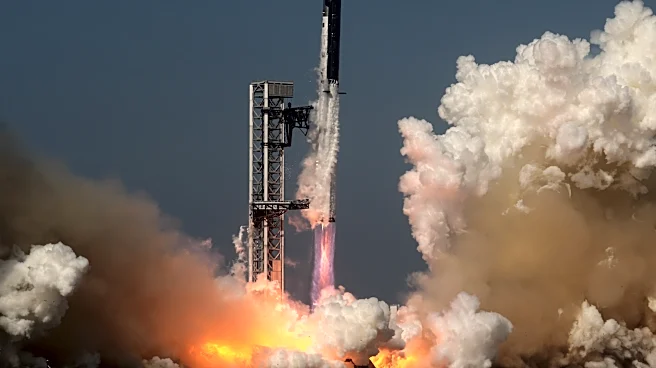
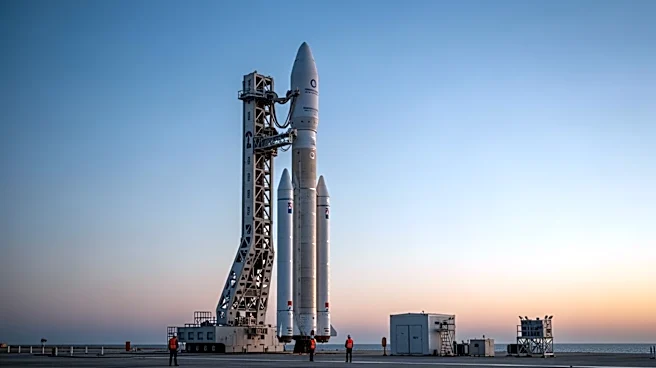
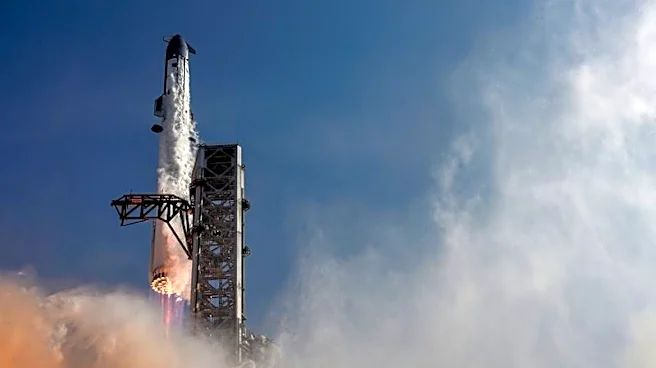
The Federal Aviation Administration (FAA) has grounded SpaceX's Starship following anomalies during its 12th test flight. The Super Heavy booster experienced engine failures during a planned flip and boostback maneuver, leading to a hard splashdown in the
Gulf of Mexico. Despite the booster issues, the Starship upper stage successfully released dummy Starlink satellites and completed atmospheric reentry. The FAA's grounding order requires SpaceX to investigate the anomalies before resuming flights. The incident affects SpaceX's plans to increase launch frequency and impacts its commercial and NASA missions.
Why It's Important?
The grounding of SpaceX's Starship is a significant development in the aerospace industry, as the rocket is central to SpaceX's future commercial and governmental missions. The anomalies highlight the challenges of developing reusable launch systems and the importance of ensuring safety and reliability. The delay in Starship flights could impact SpaceX's ability to deploy Starlink satellites and fulfill NASA's lunar landing plans. The incident underscores the need for thorough investigations and regulatory oversight to prevent future mishaps and ensure public safety during space operations.
What's Next?
SpaceX will conduct a detailed investigation to identify the cause of the booster anomalies and implement necessary corrections. The FAA will oversee the investigation and determine when Starship can resume flights. SpaceX's ability to address the issues and continue its launch schedule will be crucial for maintaining its competitive edge in the aerospace industry. The grounding may lead to adjustments in SpaceX's commercial and NASA mission timelines, and stakeholders will be closely monitoring the situation.