
What's Happening?
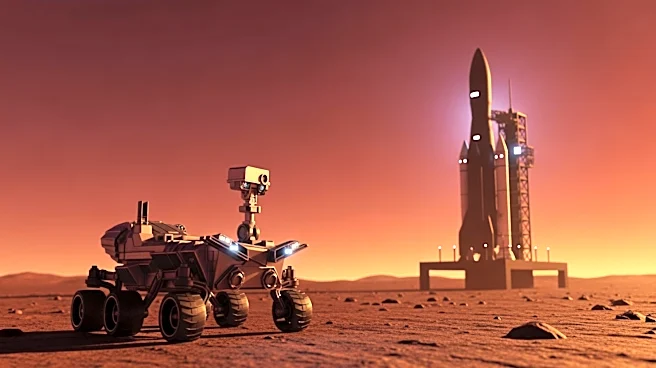
NASA has awarded SpaceX a $175.7 million contract to launch the European Space Agency's (ESA) Rosalind Franklin rover to Mars. The launch, scheduled no earlier than late 2028, will be the first time SpaceX sends
a payload to Mars. The contract was awarded on April 16, 2026, and involves using SpaceX's Falcon Heavy rocket. This mission is part of NASA's Rosalind Franklin Support and Augmentation project (ROSA), which includes providing braking engines, radioisotope heater units, additional electronics, and a mass spectrometer for the rover. The use of nuclear heating units necessitated the selection of an American rocket due to U.S. export controls, with SpaceX's Falcon Heavy chosen for its cost-effectiveness. The rover, originally set to launch in 2022 with Russia, was delayed due to geopolitical issues, leaving it without a launch vehicle until NASA's intervention.
Why It's Important?
This contract highlights SpaceX's growing role in deep space exploration, marking a significant milestone as it prepares to send a payload to Mars. The mission underscores the strategic importance of U.S. space capabilities, especially in light of geopolitical tensions that disrupted the original launch plans. The involvement of SpaceX also reflects the company's competitive edge in cost and technology, as Falcon Heavy's pricing and capabilities made it the practical choice. However, the mission faces uncertainty due to the White House's fiscal year 2027 budget proposal, which does not allocate funding for ROSA. This budgetary oversight could impact the mission's future, despite its scientific significance in searching for evidence of past life on Mars.
What's Next?
The future of the Rosalind Franklin mission depends on the resolution of budgetary issues in Washington. The White House's omission of ROSA funding in its budget proposal could lead to congressional debates and potential adjustments. Meanwhile, SpaceX is preparing for a significant public offering, with the Mars contract potentially boosting investor confidence. The outcome of these financial and political developments will determine the mission's viability and SpaceX's role in future Mars exploration efforts.