


What's Happening?
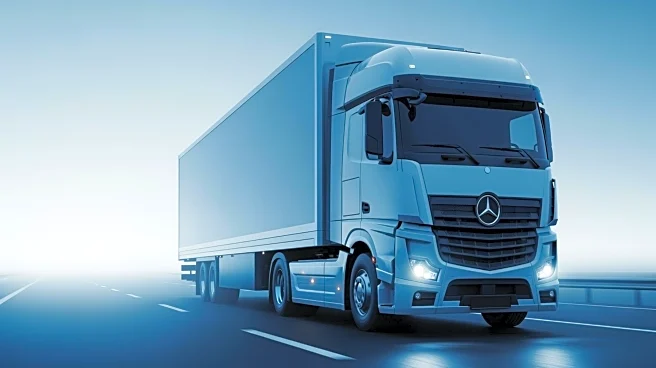
Knight-Swift Transportation is increasingly focusing on dedicated trucking as a strategic response to the volatile e-commerce logistics environment. This approach allows the company to gain better control over capacity, service levels, and customer experience.
Dedicated trucking, also known as contract carriage, involves long-term transportation agreements that provide higher service levels. The market for dedicated trucking is growing, driven by the demands of e-commerce, which requires reliable and consistent logistics solutions. Major carriers, including Knight-Swift, are leveraging dedicated trucking to stabilize last-mile and regional distribution without the complexities and costs associated with running private fleets. This trend is part of a broader industry shift towards more predictable and efficient logistics operations.
Why It's Important?
The shift towards dedicated trucking is significant for the logistics industry as it addresses the challenges posed by the e-commerce boom. By adopting dedicated trucking, companies like Knight-Swift can ensure more reliable service and better manage their logistics operations. This model offers a stable revenue stream and helps mitigate the risks associated with fluctuating demand and capacity constraints. For shippers, dedicated trucking provides a more predictable and reliable service, which is crucial in maintaining customer satisfaction in the fast-paced e-commerce market. The trend also highlights the industry's move towards more integrated and efficient supply chain solutions, which can lead to cost savings and improved operational performance.
What's Next?
As the demand for dedicated trucking continues to grow, more companies are likely to adopt this model to enhance their logistics capabilities. This could lead to increased competition among carriers to offer the best service and pricing. Additionally, the focus on dedicated trucking may drive further innovation in logistics technology and operations, as companies seek to optimize their dedicated routes and improve efficiency. Stakeholders, including shippers and carriers, will need to collaborate closely to ensure the success of dedicated trucking arrangements. The ongoing evolution of e-commerce logistics will likely continue to shape the strategies of major transportation companies.