






What's Happening?
The global artificial intelligence in agriculture market is projected to grow significantly, expanding from USD 2.17 billion in 2026 to USD 4.75 billion by 2032, according to a report. This growth is driven by the integration of edge computing, sensor
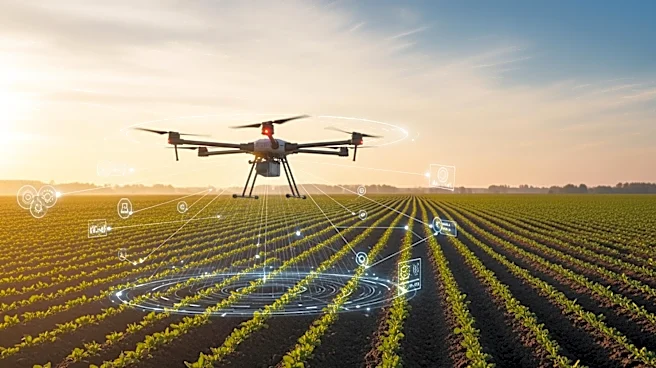
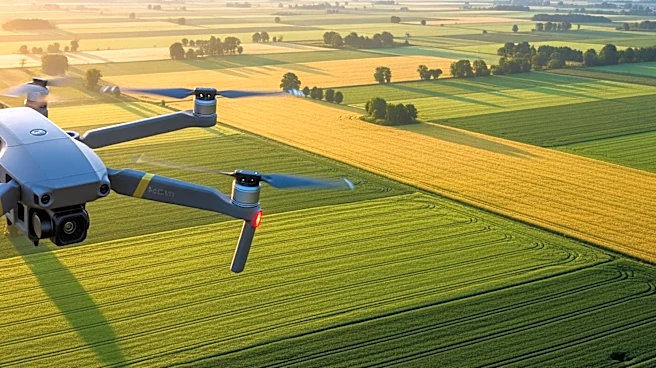
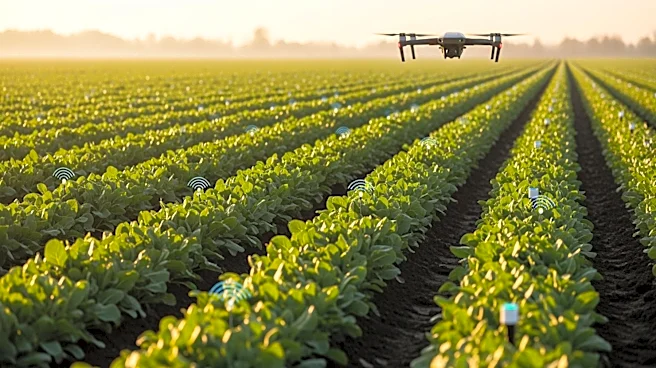
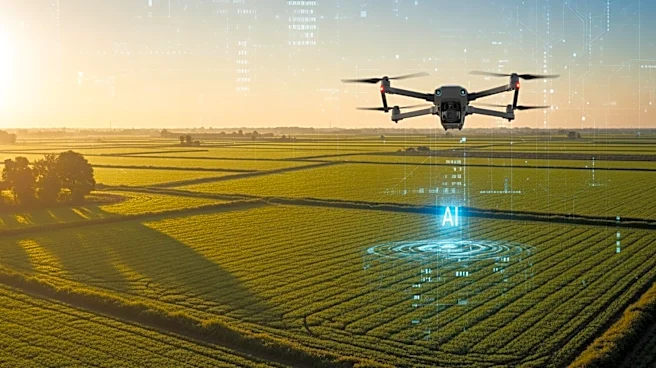
technology, and real-time analytics, which are transforming agricultural enterprises by optimizing productivity and streamlining operations. The adoption of AI technologies is accelerating among large and specialist producers, leading to investments in interoperability and modularity. These advancements are expected to reduce buyer complexity and enhance operational efficiency. The market is characterized by offerings such as hardware (cameras, drones, sensors), software (analytics platforms, decision support, farm management), and services (consulting, implementation, ongoing support). Applications include crop monitoring, livestock management, soil health analysis, supply chain logistics, and yield prediction. Technologies like drones, machine vision, predictive analytics, and robotics are being deployed in various modes, including cloud, hybrid, and on-premise.
Why It's Important?
The expansion of AI in agriculture is crucial as it promises to enhance productivity and operational efficiency in the agricultural sector, which is vital for food security and economic stability. By adopting AI technologies, farmers and agribusinesses can improve crop monitoring, livestock management, and supply chain logistics, leading to better resource management and reduced waste. The shift towards AI-driven solutions also supports the development of more sustainable farming practices, which are increasingly important in the face of climate change and environmental concerns. Additionally, the market growth reflects a broader trend of digital transformation in agriculture, which could lead to significant changes in workforce requirements, emphasizing technical and analytic skills.
What's Next?
As the market continues to grow, stakeholders in the agricultural sector are likely to focus on developing locally adapted solutions and differentiated go-to-market strategies to address regional dynamics. The adoption of outcome-focused commercial models, such as subscriptions and bundled offerings, is expected to gain favor, enabling clearer ROI measurement and performance accountability. Advances in robotics and automated platforms will continue to enhance production consistency, while workforce requirements shift towards more technical roles. The ongoing integration of AI technologies will likely drive further investments in interoperability and modularity, reducing complexity for buyers and enhancing operational transparency.
Beyond the Headlines
The integration of AI in agriculture not only impacts productivity but also raises ethical and legal considerations regarding data privacy and security. As AI systems become more prevalent, ensuring the protection of sensitive agricultural data will be crucial. Additionally, the shift towards AI-driven solutions may lead to changes in traditional farming practices, potentially affecting cultural aspects of agriculture. The emphasis on technical skills could also lead to workforce challenges, requiring retraining and education initiatives to equip workers with the necessary skills to thrive in a digitally transformed agricultural sector.