



What's Happening?
Recent developments in HR technology highlight a shift towards integrating AI into employee development and management platforms. A report by Go1, in collaboration with analyst Lori Niles-Hofmann, surveyed 700 employees and 300 managers across the U.S.,
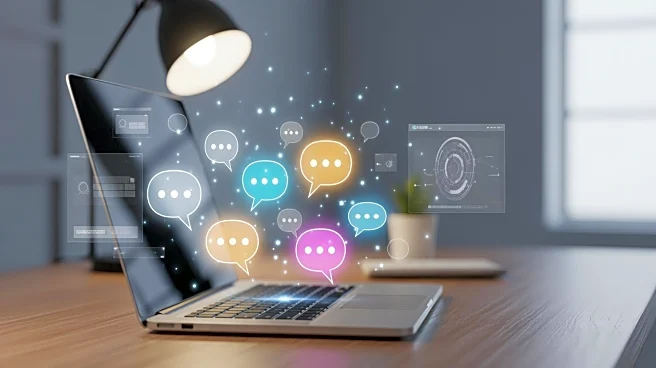
U.K., and Australia, revealing that traditional Learning Management Systems (LMS) are being bypassed in favor of tools like Slack and Teams for professional development. The study found that while 90% of employees acknowledge structured development programs, only 7% use LMS for guidance, preferring immediate support from colleagues or managers. This trend is prompting a reevaluation of how development is delivered, with a focus on embedding it within everyday workflows. Concurrently, companies like ServiceNow and Paychex are launching AI-driven solutions to streamline HR functions, such as the Autonomous Workforce and enhanced scheduling tools, aiming to improve efficiency and employee engagement.
Why It's Important?
The integration of AI into HR platforms signifies a transformative shift in how organizations approach employee development and operational efficiency. By embedding development tools within commonly used platforms like Slack and Teams, companies can provide more immediate and relevant support, potentially increasing employee satisfaction and retention. This approach aligns with the growing demand for seamless, workflow-integrated development opportunities. Additionally, AI-driven enhancements in HR operations, such as those by ServiceNow and Paychex, promise to reduce administrative burdens and improve decision-making processes. These innovations could lead to significant cost savings and productivity gains, benefiting both employers and employees. As AI continues to evolve, its role in HR could redefine traditional practices, making them more adaptive and responsive to the needs of a modern workforce.
What's Next?
As AI becomes more integrated into HR systems, organizations may need to invest in training and upskilling their workforce to effectively utilize these new tools. The shift towards AI-driven HR solutions could also prompt a reevaluation of existing HR policies and practices to ensure they align with the capabilities and efficiencies offered by AI. Companies might explore partnerships with AI vendors to further enhance their HR functions, potentially leading to more personalized and dynamic employee experiences. Additionally, the success of these integrations could influence other sectors to adopt similar AI-driven approaches, further expanding the role of AI in business operations.
Beyond the Headlines
The move towards AI in HR raises important ethical and privacy considerations. As AI systems handle more employee data, companies must ensure robust data protection measures are in place to safeguard sensitive information. There is also the potential for AI to inadvertently reinforce biases if not properly managed, highlighting the need for transparent and fair AI algorithms. Furthermore, the reliance on AI for employee development and management could alter workplace dynamics, necessitating a balance between technological efficiency and human interaction to maintain a positive organizational culture.