







What's Happening?
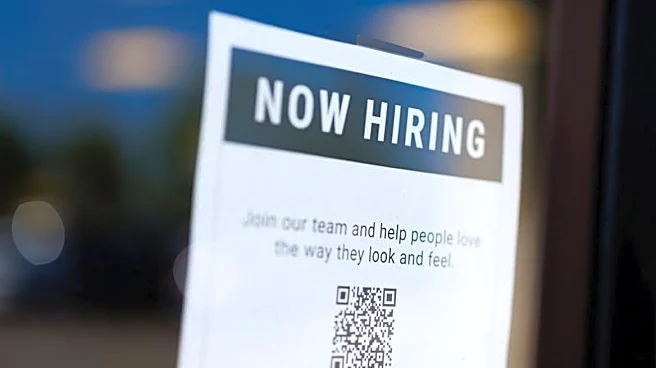
The U.S. labor market showed unexpected strength in April, adding 115,000 jobs, according to the Bureau of Labor Statistics. This figure exceeded analysts' expectations of a 62,000-job increase, although it was a decrease from the revised March figure of 185,000
jobs. Key sectors contributing to this growth included health care, transportation and warehousing, and retail trade. Despite these gains, the unemployment rate remained steady at 4.3 percent. The report also highlighted an increase in part-time employment for economic reasons, indicating some underlying challenges in the labor market.
Why It's Important?
The stronger-than-expected job growth in April suggests resilience in the U.S. economy, despite ongoing global challenges such as the war in Iran, which has driven up energy prices. This resilience is crucial as it counters fears of an imminent economic downturn, particularly in light of recent layoffs in the tech sector. The job gains in specific sectors like health care and transportation indicate potential areas of stability and growth. However, the increase in part-time employment and concerns over wage growth and underemployment suggest that the labor market's recovery may not be fully robust.
What's Next?
The next employment report from the Bureau of Labor Statistics, covering May, is expected on June 5. This will provide further insights into the labor market's trajectory. Additionally, the Federal Reserve's recent decision to keep interest rates unchanged reflects the uncertainty in the economic outlook, influenced by rising energy prices and geopolitical tensions. Stakeholders will be closely monitoring these developments to assess the broader economic implications and potential policy responses.