



What's Happening?
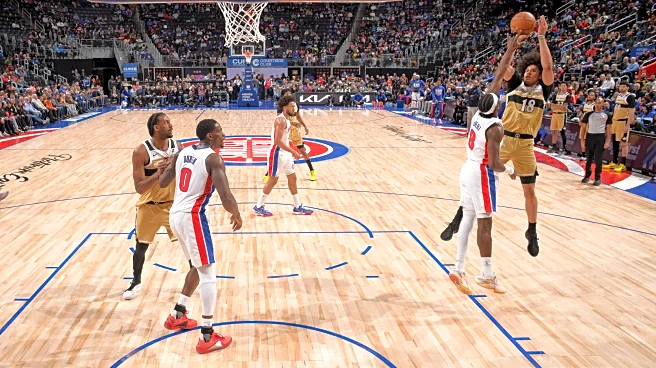
Daniss Jenkins, a player for the Detroit Pistons, is set to be converted from a two-way contract to a standard contract. This decision comes as Jenkins approaches the limit of 50 active games allowed for two-way players in the NBA. Jenkins, who was inactive for a recent game against the Washington Wizards, will be available for the upcoming game against the New York Knicks. Pistons president of basketball operations, Trajan Langdon, confirmed the expected contract conversion to ensure Jenkins' continued availability. Jenkins has been a significant contributor to the Pistons, serving as a key player in the second unit and occasionally stepping in for starting player Cade Cunningham. This season, Jenkins has averaged 7.9 points, 3.3 assists, 1.8
rebounds, 1.0 three-pointers, and 0.9 steals per game, with shooting percentages of 42.1% from the field and 38.5% from three-point range.
Why It's Important?
The conversion of Daniss Jenkins' contract is significant for the Detroit Pistons as it ensures the team retains a valuable player who has been instrumental in their lineup. Jenkins' performance has been crucial, especially in providing depth and flexibility to the team's roster. By securing Jenkins on a standard contract, the Pistons can continue to leverage his skills without the limitations imposed by a two-way contract. This move also highlights the strategic management of player contracts in the NBA, where teams must balance player development with roster constraints. For Jenkins, this conversion represents a step forward in his professional career, offering him greater stability and potential for growth within the league.
What's Next?
Following the contract conversion, Jenkins is expected to continue contributing to the Pistons' efforts in the current NBA season. The team will likely integrate him more fully into their game strategies, given his proven track record. This change may also influence the Pistons' future roster decisions, as they assess the impact of Jenkins' performance on their overall team dynamics. Additionally, other teams may observe this move as a case study in managing two-way contracts and player development, potentially influencing similar decisions across the league.