


What's Happening?
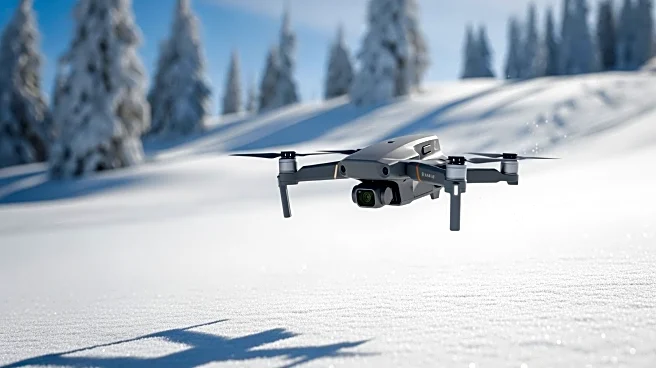
The International Ski Federation (FIS) has partnered with HOVERAir to integrate self-flying cameras into snow sports, enhancing the viewing experience for fans. These drones, including the HOVERAir X1 PROMAX, are designed to autonomously track athletes
at speeds up to 42 km/h while capturing 8K footage. This technology was prominently featured during the Milano Cortina 2026 Olympic Winter Games, where 25 drones provided dynamic perspectives of events such as ski jumping and snowboarding. The initiative is part of FIS's strategy to focus on the human side of winter sports, aiming to deliver authentic and engaging content to fans.
Why It's Important?
This partnership signifies a shift in how snow sports are presented to audiences, leveraging advanced technology to offer immersive experiences. By providing unique angles and perspectives, the drones enhance storytelling and viewer engagement, potentially increasing the sport's popularity. For FIS, this collaboration aligns with their goal to boost digital engagement and connect with fans on a deeper level. The use of drones also democratizes content creation, allowing both professional and amateur athletes to capture and share their experiences, thus broadening the sport's appeal and accessibility.
What's Next?
As the snow sports season progresses, FIS plans to deploy more self-flying cameras across various events, continuing to explore innovative ways to engage audiences. The positive reception of drone footage at the Olympics suggests a growing demand for such technology, which could lead to further collaborations and technological advancements in sports broadcasting. Additionally, the partnership with HOVERAir may inspire other sports organizations to adopt similar technologies, potentially transforming how sports are experienced globally.
Beyond the Headlines
The integration of self-flying cameras into snow sports raises questions about the future of sports broadcasting and the role of technology in enhancing viewer experiences. This development could lead to broader discussions about privacy, data security, and the ethical use of drones in public spaces. Moreover, as technology becomes more embedded in sports, there may be a shift in how athletes train and compete, with an increased focus on capturing and analyzing performance data.