







What's Happening?
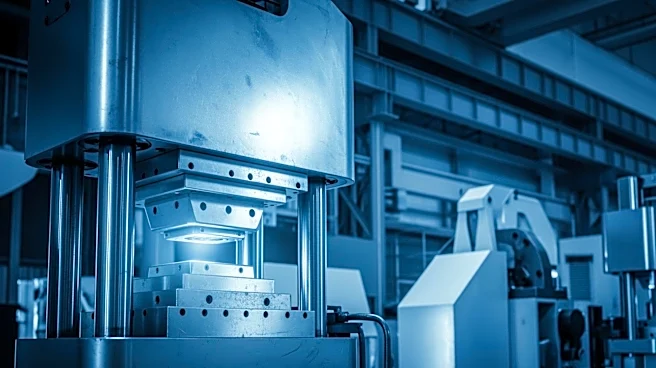
The cold room forging press market is experiencing significant growth, driven by the need for precision metal components in industries such as automotive and aerospace. Unlike traditional hot forging, cold forging is performed at room temperature, preserving
material grain structure and enhancing mechanical properties. This method reduces energy costs and material waste, making it an attractive option for manufacturers. The market, valued at approximately USD 2.6 billion in 2025, is projected to reach USD 4.1 billion by 2032, with a CAGR of 6.9%. The shift towards electric vehicles and aerospace supply chain reshoring are key factors driving demand for cold room forging presses.
Why It's Important?
The transition to cold room forging presses represents a significant shift in manufacturing practices, offering cost savings and improved product quality. As industries face increasing pressure to reduce energy consumption and material waste, cold forging provides a viable solution. The automotive industry's move towards electric vehicles, which require precision-forged components, further underscores the importance of this technology. Additionally, government incentives for near-net-shape manufacturing are encouraging the adoption of cold forging, positioning it as a critical component of sustainable manufacturing strategies.
What's Next?
The market is expected to continue growing, with increased investment in cold room forging press capacity, particularly in regions like China and India. As manufacturers seek to enhance their production capabilities, the adoption of advanced cold forging technologies will likely accelerate. The development of next-generation presses with hybrid drive systems and improved energy efficiency will further drive market growth. Companies in the sector are poised to benefit from these trends, with opportunities for expansion and innovation in precision metal forming.