
What's Happening?
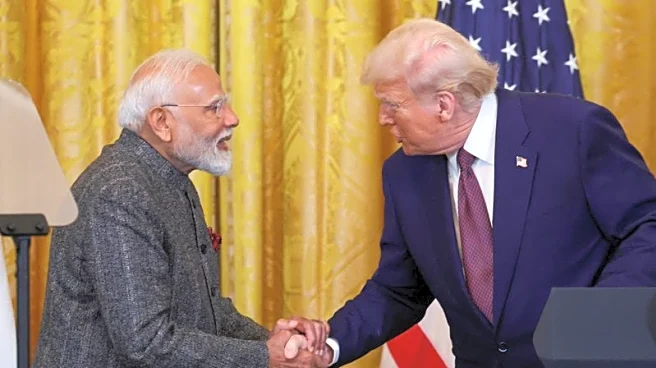
India and the United States have reached an interim trade agreement that impacts agricultural imports. India has agreed to reduce or eliminate tariffs on certain American agricultural products, including
Distiller’s Dried Grains with Solubles (DDGS), soyabean oil, red sorghum, tree nuts, and wine. However, India has not opened its market to imports of soyabean, corn, fuel ethanol, cotton, or dairy and poultry products from the US. The agreement aims to provide greater market access for American farm produce, which could affect Indian farmers and the domestic agricultural industry.
Why It's Important?
The trade agreement holds significant implications for both countries. For the US, it opens up new markets for its agricultural products, potentially boosting exports and benefiting American farmers. For India, the agreement could lead to increased availability of cheaper agricultural imports, which may benefit the livestock sector by providing cost-effective feed options. However, it also poses challenges for Indian soyabean farmers and the processing industry, as increased imports could lead to reduced domestic prices and impact local production. The agreement reflects ongoing trade negotiations and the balancing of interests between the two nations.
What's Next?
The implementation of the trade agreement will be closely monitored by stakeholders in both countries. Indian policymakers and industry leaders will assess the impact on domestic agriculture and consider measures to support affected sectors. The US will likely continue to push for further market access, particularly for genetically modified crops and dairy products. Future negotiations may address non-tariff barriers and explore additional areas of cooperation. The agreement's success will depend on its ability to balance trade benefits with domestic economic interests.