


What's Happening?
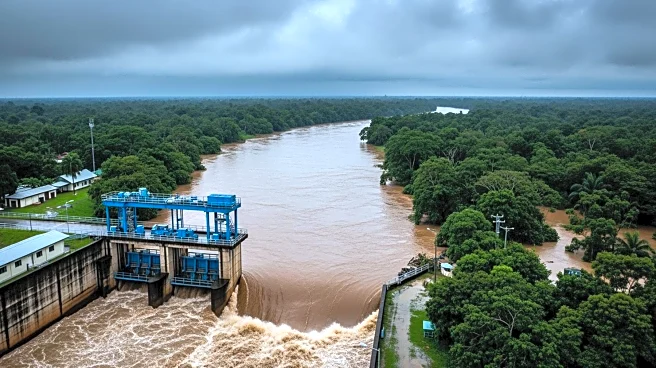
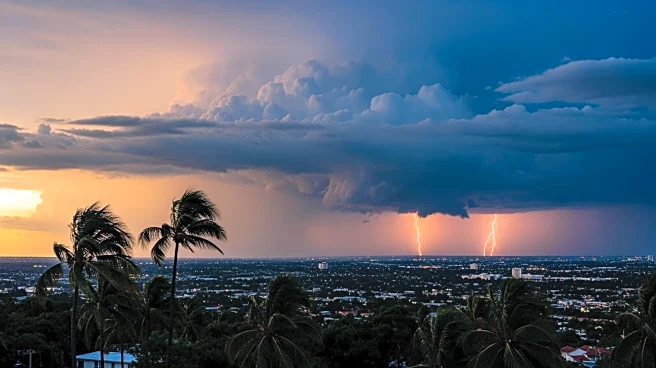
According to a report by Swiss Re Institute, wildfires, severe convective storms, and floods accounted for a record 92% of global natural catastrophe insured losses, totaling $107 billion in 2025. The Palisades and Eaton fires in Los Angeles alone resulted
in $40 billion in insured losses, while severe convective storms contributed $51 billion. Despite a below-average year for flood-related losses, the overall trend shows a significant increase in insured losses from natural disasters. The report highlights the growing risk of wildfires, with insured losses rising by an estimated 12% annually. Swiss Re warns that if losses return to long-term trends, they could reach $186 billion by 2030.
Why It's Important?
The report underscores the increasing financial burden of natural disasters on the insurance industry and the broader economy. With insured losses rising by 5-7% annually, the need for effective risk management and adaptation strategies is critical. The high percentage of insured losses indicates the insurance industry's role in mitigating economic impacts, but significant protection gaps remain, especially in emerging economies. Addressing these gaps through broader insurance coverage and risk adaptation measures is essential to manage future risks and reduce economic vulnerabilities.
What's Next?
Swiss Re suggests that adaptation measures, such as targeted physical adaptations at the homeowner level, can help stabilize loss trajectories. The report calls for an integrated approach combining insurance coverage with risk-adaptation measures to narrow natural catastrophe protection gaps. As exposure to natural disasters continues to build, identifying and managing risk drivers will be crucial to mitigating future losses.