
What's Happening?
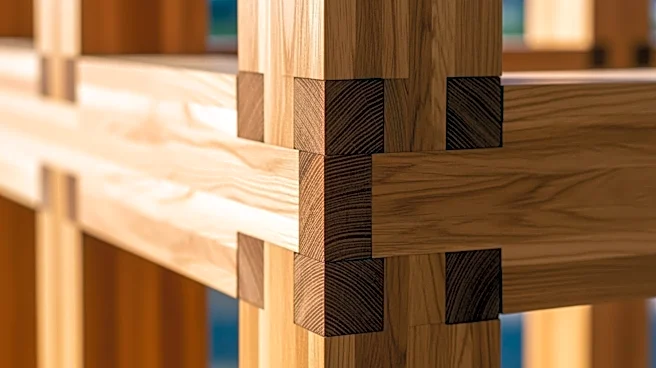
Mercer Mass Timber has launched a new design tool called BuildSpec, aimed at accelerating the development of affordable mid-rise housing using mass timber construction. This tool is designed to assist
architects, engineers, and developers in exploring hybrid cross-laminated timber (CLT) and cold-formed steel (CFS) buildings during the early stages of project planning. BuildSpec facilitates rapid prototyping of structural schemes and allows for real-time comparisons of cost and embodied carbon. It also aids in evaluating conceptual structural layouts against key design parameters, enabling project teams to assess feasibility earlier in the design process. Initially, BuildSpec will focus on the Canadian market, with plans to release a U.S. version by the summer of 2026.
Why It's Important?
The introduction of BuildSpec is significant as it addresses the growing demand for affordable housing solutions in urban areas. By enabling more efficient design decisions and reducing uncertainty in the use of mass timber, the tool supports the construction of sustainable and cost-effective housing. Mass timber is increasingly recognized for its lower carbon footprint compared to traditional materials like steel and concrete, making it a favorable option in the context of environmental sustainability. The tool's ability to streamline the design process could lead to faster project completion times and reduced costs, benefiting developers and ultimately, residents seeking affordable housing options.
What's Next?
With the anticipated release of the U.S. version of BuildSpec in the summer of 2026, stakeholders in the American construction industry can expect to have access to this innovative tool. This could lead to a broader adoption of mass timber in the U.S. market, potentially influencing building codes and standards to accommodate this construction method. As the tool gains traction, it may also prompt further research and development in mass timber technologies, encouraging more sustainable building practices across North America.