





What's Happening?
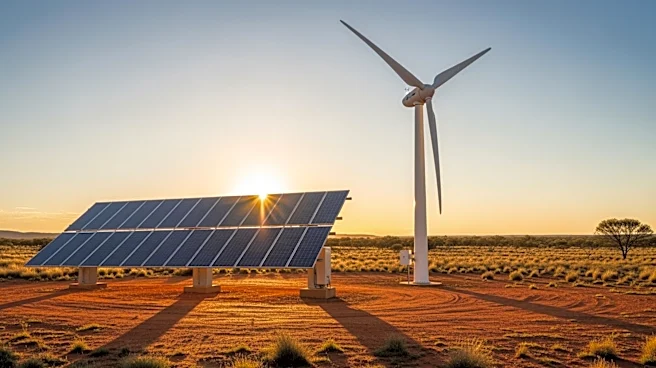
BHP and Yindjibarndi Energy Corporation (YEC) have signed a memorandum of understanding (MoU) to explore large-scale renewable energy options for BHP's iron ore operations in the Pilbara region of Western Australia. This non-binding agreement aims to evaluate
potential power generation, electricity transmission, and supporting infrastructure, focusing on scalable renewable energy systems. The collaboration seeks to provide reliable electricity to BHP's mining, rail, and Port Hedland operations. BHP's vice-president of WA Nickel and Operational Decarbonisation, Daniel Heal, highlighted the importance of combining local insights with technical expertise to advance decarbonization efforts. YEC CEO Craig Ricato emphasized the alignment of this initiative with YEC's mission to create sustainable energy solutions that benefit Indigenous communities.
Why It's Important?
This collaboration is significant as it represents a step towards reducing carbon emissions in the mining sector, a major contributor to global greenhouse gas emissions. By focusing on renewable energy, BHP aims to cut its operational emissions by at least 30% from FY2020 levels by 2030, with a net-zero target by 2050. The partnership with YEC, an Indigenous-led entity, also underscores the importance of involving local communities in sustainable development projects. This initiative could set a precedent for other mining companies to follow, potentially leading to broader adoption of renewable energy in the industry, which would have positive environmental and social impacts.
What's Next?
The MoU does not commit either party to specific projects or financial obligations, but it lays the groundwork for future developments. BHP and YEC will continue to explore viable renewable energy solutions, with potential projects likely to emerge from this collaboration. The ongoing engagement with Traditional Owner groups in the Pilbara will be crucial to ensure that any developments provide lasting benefits to Indigenous communities. Additionally, YEC's ongoing projects, such as the Baru-Marnda and Chichester Range Transmission Corridor, are expected to progress, potentially offering renewable energy solutions to other major energy users in the region.