
What's Happening?
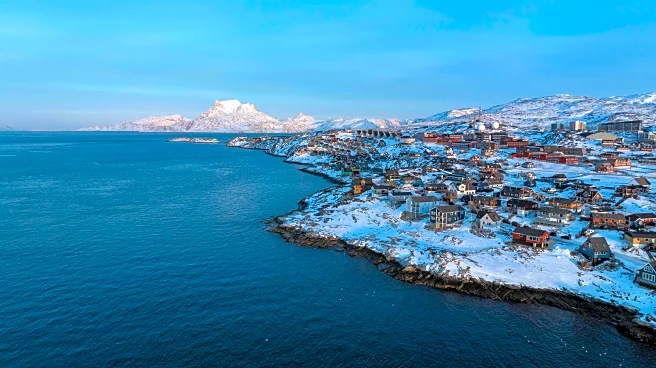
An American energy company, March GL, is preparing to drill for oil in Greenland's Jameson Land Basin, a region with geological similarities to Norway's North Sea oilfields. The project is moving forward under the management of March GL, which is set
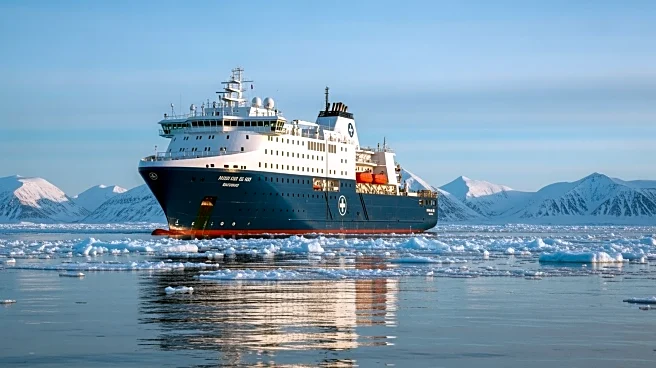
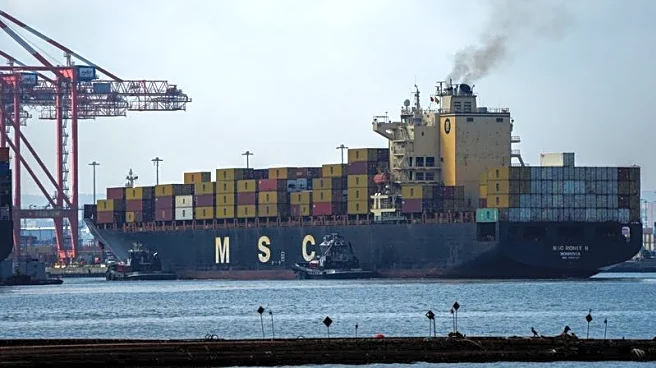
to become the publicly-listed 'Greenland Energy Company'. The company has hired Halliburton for logistics, IPT for petroleum engineering, and Stampede Drilling for drilling services. Canadian shipping company Desgagnes, with experience in Arctic logistics, will transport equipment and cargo, working with Greenlandic operator Royal Arctic Line. This development follows historical interest in the region's oil potential, initially explored by ARCO in the 1980s.
Why It's Important?
The drilling project in Greenland underscores the strategic and economic interests in the Arctic region, particularly as global powers vie for influence. The potential discovery of significant oil reserves could impact global energy markets and alter geopolitical dynamics. For the U.S., this project aligns with broader national security interests, as previously highlighted by President Trump's interest in Greenland. Economically, successful oil extraction could provide substantial revenue and energy resources, influencing energy independence and market stability. However, it also raises environmental concerns, given the fragile Arctic ecosystem and the global push towards renewable energy.
What's Next?
The next steps involve the commencement of drilling operations, expected to begin in 2026. Stakeholders, including environmental groups and international governments, may react to the project, potentially influencing regulatory and operational aspects. The project's progress will be closely monitored, given its implications for Arctic policy and environmental impact. Additionally, the transition of March GL into a publicly-listed company could attract investor interest and scrutiny, impacting its financial and operational strategies.
Beyond the Headlines
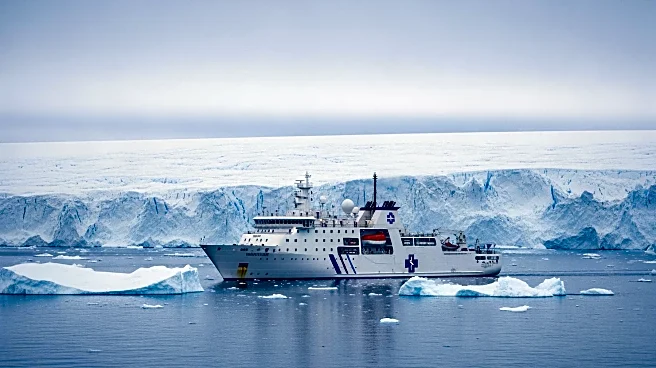
Beyond immediate economic and strategic implications, the drilling project in Greenland raises ethical and environmental questions. The Arctic's vulnerability to climate change and the potential for oil spills pose significant risks. This development may prompt discussions on balancing energy needs with environmental protection, influencing future Arctic policies. The project also highlights the ongoing tension between fossil fuel exploration and the global shift towards sustainable energy solutions.