



What's Happening?
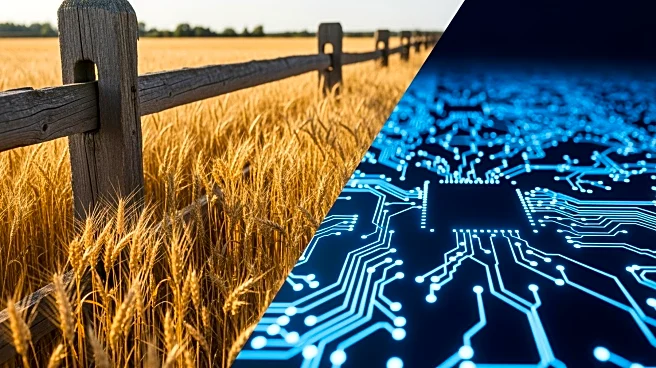
Idaho is experiencing a shift in its economic landscape as the state balances its traditional agricultural roots with a growing technology sector. The University of Idaho reports that agriculture still contributes significantly to the state's economy,
with $44.5 billion in revenue. However, the influx of tech companies like Microsoft, Amazon, and Meta, along with Micron's expansion, is transforming Idaho into a mini-tech hub. This diversification is reshaping the workforce and economic priorities, raising concerns about the potential impact on farmland and the agricultural sector's future.
Why It's Important?
The transition from a predominantly agricultural economy to a more diversified one with a strong tech presence has significant implications for Idaho's future. While the tech industry brings new opportunities and economic growth, it also poses challenges, such as the potential loss of farmland to development. This shift could alter the state's economic identity and affect the livelihoods of those dependent on agriculture. Balancing these industries is crucial to maintaining economic stability and ensuring that both sectors can thrive without compromising each other.
Beyond the Headlines
The integration of technology into Idaho's economy could lead to innovative agricultural practices, enhancing productivity and sustainability. However, it also raises questions about land use and environmental impact. The state's ability to manage this transition effectively will be critical in preserving its agricultural heritage while embracing new economic opportunities. This balancing act may serve as a model for other regions facing similar economic shifts.