


What's Happening?
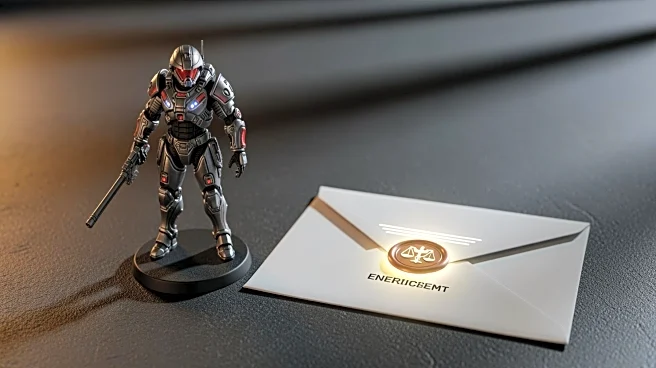
Games Workshop has issued a DMCA notice to Tundra Interactive, the developers of the game Void War, due to alleged copyright infringement. The issue arose from a specific trailer for Void War, which featured 'oversized convex shoulder pads with a metallic rim' that Games Workshop claimed could be mistaken for elements from their Warhammer 40,000 universe. Tundra Interactive initially thought the notice was a prank due to the email being signed by 'Mal Reynolds,' a character from the TV show Firefly. However, the notice was legitimate, prompting Tundra to remove the trailer to comply with the DMCA and avoid further legal complications. Despite the setback, Void War has been re-released on Steam without the contentious trailer.
Why It's Important?
This incident highlights
the ongoing challenges in the gaming industry regarding intellectual property rights and the fine line between inspiration and infringement. For developers, especially smaller studios like Tundra Interactive, navigating these legal waters can be daunting and costly. The case underscores the importance of clear differentiation in game design to avoid potential legal disputes. For Games Workshop, protecting their intellectual property is crucial to maintaining the distinctiveness of their brand, which is a significant part of their business model. This situation also serves as a reminder of the complexities involved in creative industries where similar themes and designs often overlap.
What's Next?
Following the removal of the trailer, Void War is back on Steam, suggesting that Tundra Interactive is keen to move past the issue and focus on the game's success. However, this incident may prompt other developers to review their content more carefully to avoid similar disputes. For Games Workshop, this action reinforces their stance on protecting their intellectual property, which may lead to more vigilant monitoring of other games that could potentially infringe on their designs. The broader gaming community might see this as a call to action to ensure originality and compliance with copyright laws in their creative processes.