

What's Happening?
HSBC strategists have observed that U.S. equity markets are currently pricing in a recession rather than stagflation, as the ongoing U.S.-Iran conflict continues to impact global markets. According to a note by Alastair Pinder and Pankaj Agarwala, the volatility
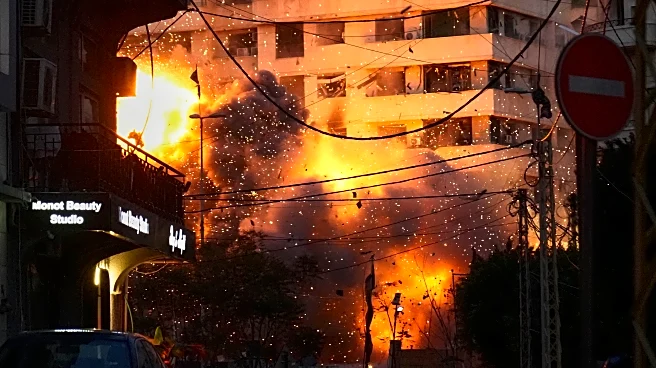
in oil markets has led to significant dislocations in equity markets. The strategists noted that since the U.S. and Israel initiated strikes on Iran, oil prices have surged, raising fears of a 1970s-style stagflation. However, they argue that the equity market's behavior suggests a recessionary outcome is more likely, with their models indicating a 35% probability of recession, up from 10% two weeks prior. The likelihood of stagflation remains low at 8%. The strategists highlighted that global equities have fallen by approximately 5% since the conflict began, but they see potential buying opportunities in oversold markets such as Korea, South Africa, and Indonesia.
Why It's Important?
The analysis by HSBC is significant as it provides insight into how global conflicts, particularly the U.S.-Iran war, are influencing investor sentiment and market dynamics. The potential shift towards a recessionary outlook could have wide-ranging implications for U.S. industries, particularly those sensitive to economic cycles such as materials, industrials, and financials. The strategists' identification of oversold markets presents potential opportunities for investors looking to capitalize on undervalued equities. Additionally, the ongoing conflict and its impact on oil prices could further strain sectors like retail, travel, and leisure, which are already identified as vulnerable in a stagflation scenario. Understanding these dynamics is crucial for investors and policymakers as they navigate the economic uncertainties posed by geopolitical tensions.
What's Next?
As the U.S.-Iran conflict continues, market participants will likely monitor developments closely, particularly any changes in oil prices and their subsequent impact on global markets. Investors may adjust their portfolios to hedge against potential recessionary risks, focusing on sectors that can withstand economic downturns. Policymakers might also consider measures to stabilize markets and mitigate the economic fallout from the conflict. The situation remains fluid, and further geopolitical developments could alter market expectations and investor strategies.