

What's Happening?
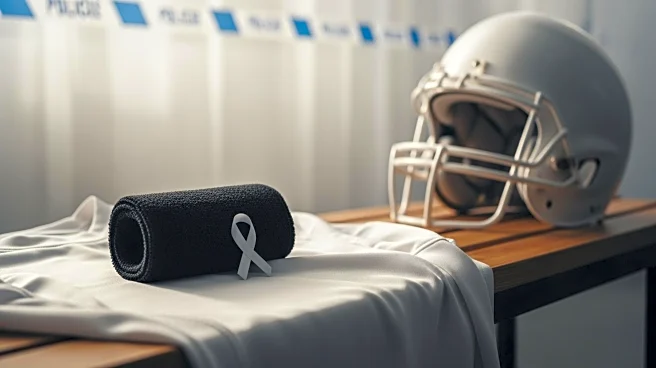
Ukrainian skeleton athlete Vladyslav Heraskevych has been granted permission by the International Olympic Committee (IOC) to wear a black armband during the Milan Cortina Games. However, the IOC has prohibited him from wearing a helmet painted to honor Ukrainian athletes killed in the war with Russia. The helmet, featuring images of over 20 athletes and coaches, was deemed a violation of Olympic rules against political statements. Heraskevych, who plans to continue wearing the helmet during training, argues that it does not breach any laws or rules. The IOC's decision is seen as a compromise, allowing Heraskevych to express himself through the armband, which must remain text-free.
Why It's Important?
This decision highlights the ongoing tension between the IOC's
regulations and athletes' desires to make personal or political statements. The compromise reflects the IOC's attempt to balance its rules with athletes' rights to expression. The situation underscores the broader impact of the Russian-Ukrainian conflict on international sports, as athletes seek to raise awareness and honor those affected by the war. The IOC's stance may influence future cases where athletes wish to make political or personal statements at the Games, potentially affecting how sports organizations handle similar issues.
What's Next?
Heraskevych plans to continue advocating for the right to wear his commemorative helmet, potentially setting a precedent for future athlete expressions at the Olympics. The IOC's decision may prompt discussions among sports governing bodies about the balance between regulation and freedom of expression. Stakeholders, including athletes, national Olympic committees, and human rights organizations, may engage in dialogue to address these complex issues. The outcome could influence future Olympic policies and the extent to which athletes can express personal or political views during competitions.