
What's Happening?
The WNBA is experiencing a flurry of activity as teams finalize their rosters ahead of the 2026 season. The league and the players' association recently agreed to a new collective bargaining agreement,
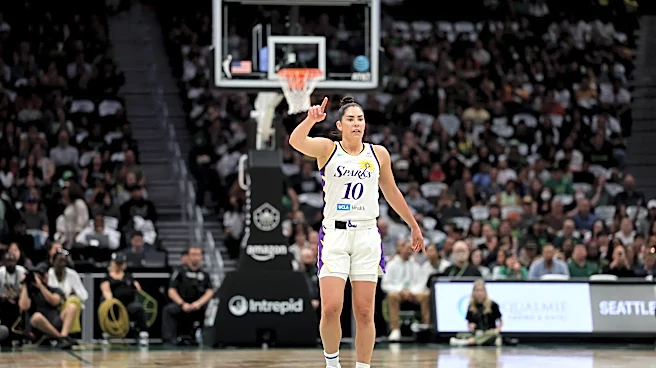
prompting a compressed offseason with an expansion draft, free agency, and the WNBA draft. Notable transactions include the Minnesota Lynx signing Natasha Howard to a two-year, $1.4 million deal, and the Chicago Sky acquiring Rickea Jackson in a trade with the Los Angeles Sparks, who received Ariel Atkins in return. The Golden State Valkyries have been active, signing several players to training camp contracts and re-signing key players like Iliana Rupert. Additionally, Brittney Griner is finalizing a seven-figure deal with the Connecticut Sun, and Kelsey Plum is returning to the Los Angeles Sparks on a $999,999 one-year deal.
Why It's Important?
These transactions are significant as they reshape team dynamics and competitive balance in the WNBA. The new collective bargaining agreement has introduced financial flexibility, allowing teams to make strategic signings and trades. This offseason activity is crucial for teams aiming to strengthen their rosters and improve their chances of success in the upcoming season. The movement of high-profile players like Brittney Griner and Kelsey Plum highlights the league's growing competitiveness and the importance of strategic roster management. The deals also reflect the league's efforts to enhance player compensation and career stability, which could attract more talent and increase the league's visibility and popularity.
What's Next?
As the WNBA season approaches, teams will continue to finalize their rosters and prepare for the start of the season on May 8. The impact of these signings and trades will become evident as teams begin to compete. Fans and analysts will be watching closely to see how these changes affect team performance and league standings. The new collective bargaining agreement may also lead to further discussions on player rights and league policies, potentially influencing future negotiations and league operations.