






What's Happening?
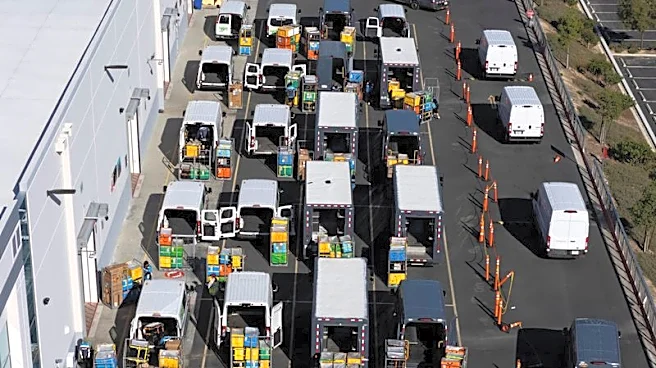
Amazon has announced the launch of Amazon Supply Chain Services, a new initiative that opens its global logistics network to businesses of all sizes. This service includes freight, distribution, fulfillment, and parcel shipping capabilities, positioning
Amazon as a direct competitor to established logistics companies like UPS and FedEx. The service is designed to support a wide range of industries, including healthcare, automotive, manufacturing, and retail. Major brands such as Procter & Gamble, 3M, Lands’ End, and American Eagle Outfitters have already signed up to use Amazon's supply chain services. This move represents a significant expansion of Amazon's e-commerce division, transforming a service previously used by independent third-party sellers into a broader offering for any business.
Why It's Important?
The introduction of Amazon Supply Chain Services marks a strategic expansion for Amazon, potentially disrupting the logistics and supply chain industry. By leveraging its extensive infrastructure and expertise, Amazon aims to provide a comprehensive logistics solution that could attract businesses away from traditional providers like UPS and FedEx. This development could lead to increased competition in the logistics sector, potentially driving down costs and improving service offerings for businesses. For Amazon, this move diversifies its revenue streams and strengthens its position in the e-commerce market by integrating more deeply into the supply chains of major companies.
What's Next?
As Amazon rolls out its supply chain services, the logistics industry may see significant shifts. Competitors like UPS and FedEx might respond by enhancing their own service offerings or adjusting pricing strategies to retain clients. Businesses across various sectors could benefit from Amazon's competitive pricing and integrated logistics solutions, potentially leading to increased efficiency and cost savings. Additionally, Amazon's entry into this market could spur innovation and technological advancements in logistics, as companies strive to maintain their market share.