






What's Happening?
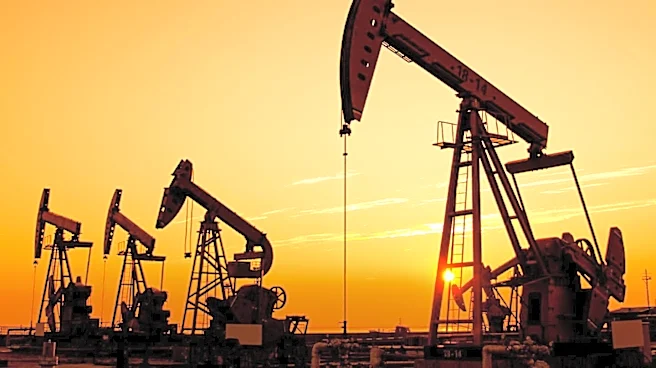
Global oil inventories are approaching critically low levels, raising the possibility of a significant price spike to $150-160 per barrel in the coming weeks. Neil Chapman, senior vice president of ExxonMobil, highlighted that the world could be nearing
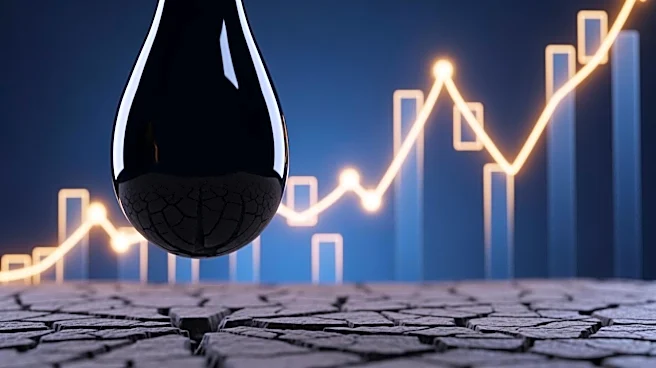
unprecedented inventory lows, with a timeframe of two to four weeks being suggested for reaching these critical levels. The current price of oil is in the $90s, but the ongoing geopolitical tensions, particularly in the Strait of Hormuz, contribute to the uncertainty of future oil flows. The potential for an 'oil shock' could send ripples through the markets, affecting inflation and possibly leading to stagflation.
Why It's Important?
The potential spike in oil prices to $150-160 per barrel could have significant implications for the U.S. economy and global markets. Such an increase would likely exacerbate inflationary pressures, impacting consumer prices and potentially slowing economic growth. Industries heavily reliant on oil, such as transportation and manufacturing, could face increased costs, which may be passed on to consumers. Additionally, the uncertainty surrounding oil flows from the Middle East could lead to volatility in financial markets, affecting investor confidence and economic stability. The situation underscores the importance of strategic energy reserves and the need for diversified energy sources to mitigate such risks.
What's Next?
If oil prices do spike as predicted, it could prompt a range of responses from governments and industries. Policymakers may consider releasing strategic reserves to stabilize prices, while businesses might seek to hedge against rising costs through investments in alternative energy sources. The situation could also accelerate discussions on energy independence and the transition to renewable energy. In the financial markets, investors may adjust their portfolios to account for increased volatility and inflationary pressures. The coming weeks will be critical in determining the trajectory of oil prices and their broader economic impact.