




What's Happening?
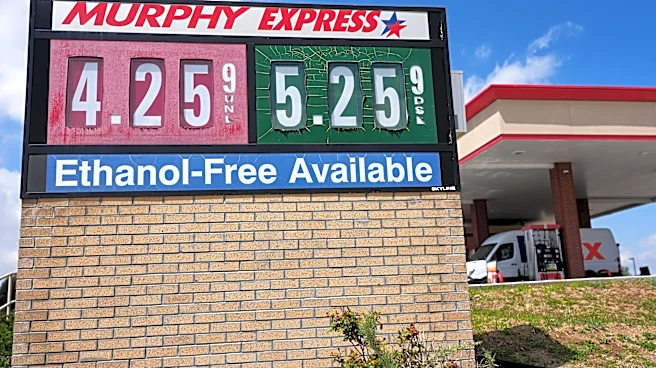
A report from the Federal Reserve Bank of New York highlights how rising gas prices are widening the economic disparity between wealthy and poor Americans. Following the onset of the Iran war on February 28, gas prices surged by 25% by the end of March,
with a further increase of 50% since the conflict began. Lower-income households, earning less than $40,000 annually, reduced their gas consumption by 7% but still faced a 12% increase in spending. In contrast, higher-income households, earning $125,000 or more, increased their gas spending by 19% while only slightly reducing consumption. This disparity underscores the 'K-shaped economy,' where wealthier individuals continue to thrive while lower-income groups struggle.
Why It's Important?
The surge in gas prices and its disproportionate impact on lower-income households highlight ongoing economic inequalities in the U.S. As poorer families allocate more of their income to fuel, they have less to spend on other essentials, potentially slowing economic growth. This situation could exacerbate existing financial strains and contribute to broader economic instability. The report suggests that while wealthier households can absorb higher costs without significant lifestyle changes, poorer households face tougher choices, potentially leading to increased financial insecurity and reduced economic mobility.
What's Next?
If gas prices remain high, the economic strain on lower-income households could intensify, prompting calls for policy interventions to address energy affordability and economic inequality. Policymakers may consider measures such as subsidies or tax relief to alleviate the burden on affected families. Additionally, the ongoing geopolitical tensions contributing to price volatility will likely remain a focus for both economic analysts and government officials as they seek to stabilize the market and protect vulnerable populations.