







What's Happening?
Vineyard Wind has filed a lawsuit against GE Renewables in Suffolk Superior Court, aiming to prevent the turbine manufacturer from withdrawing from their $4.5 billion offshore wind project. The lawsuit follows GE Renewables' termination notice, citing
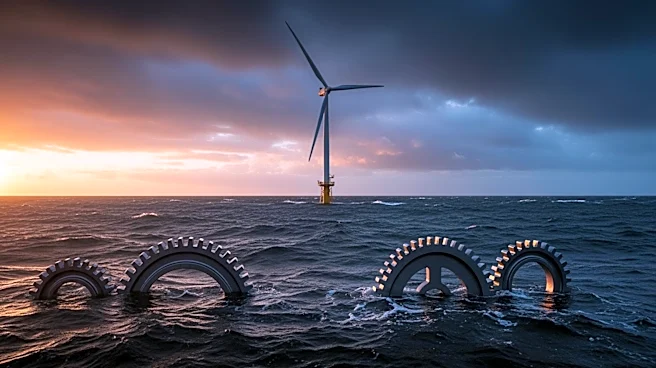
Vineyard Wind's failure to pay over $300 million in bills. Vineyard Wind argues that GE Renewables' departure would jeopardize the project's survival, leaving behind a 'dormant wind farm graveyard.' The wind farm, located southwest of Nantucket, consists of 62 turbines, which are not yet fully operational due to defective blades and other issues. Vineyard Wind claims it is owed more than $545 million by GE Renewables for expenses related to these defects. The lawsuit highlights the critical role GE Renewables plays in maintaining and operating the turbines, which are essential for supplying power to Massachusetts consumers.
Why It's Important?
The legal battle between Vineyard Wind and GE Renewables underscores the challenges facing the offshore wind industry, particularly in terms of project execution and partnerships. The outcome of this lawsuit could have significant implications for the future of renewable energy projects in the U.S., as it may affect investor confidence and the viability of similar projects. If Vineyard Wind fails to resolve the dispute, it risks defaulting on loans, potentially leading to foreclosure and depriving Massachusetts residents of low-cost renewable energy. The case also highlights the importance of reliable partnerships and the complexities involved in large-scale renewable energy projects.
What's Next?
The lawsuit's resolution remains uncertain, with GE Renewables having until April 15 to respond to the complaint. A hearing is scheduled for April 16 in Boston. If GE Renewables successfully exits the project, Vineyard Wind may face significant financial and operational challenges, including the inability to find a replacement supplier. The federal Bureau of Ocean Energy Management's previous waiver of decommissioning costs adds another layer of complexity, as there is no funding available to remove the turbines if the project fails. Stakeholders in the renewable energy sector will be closely monitoring the case's developments.