

What's Happening?
The United States is experiencing a significant rise in gasoline prices, which could potentially negate the benefits of tax refunds from President Trump's One Big Beautiful Bill Act. Economists from the Stanford Institute for Economic Policy Research
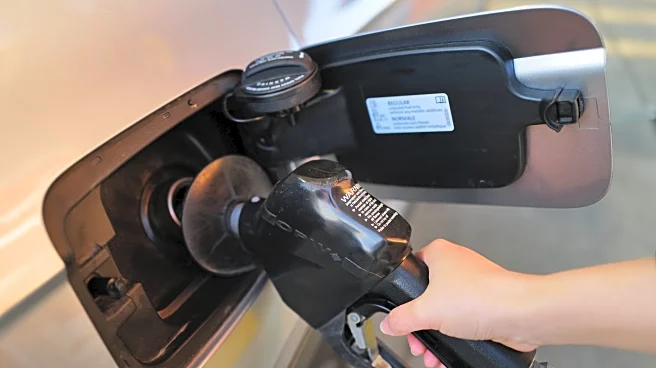
have warned that if the Strait of Hormuz remains closed and oil prices reach $110 per barrel, gas prices could peak at $4.36 per gallon by May. This increase would result in Americans spending an average of $740 more on gas this year, effectively canceling out the projected $748 increase in tax refunds for a typical household. The closure of the Strait of Hormuz, a critical chokepoint for global oil supply, has been exacerbated by ongoing military operations initiated by President Trump against Iran. Gas prices have already surged by over 90 cents since late February, reaching their highest levels since 2023.
Why It's Important?
The rise in gasoline prices poses a significant economic challenge, particularly for lower- and middle-income households, who spend a larger portion of their budget on fuel. This situation exacerbates the existing economic disparity, as wealthier Americans are less affected by such increases. The elevated gas prices could lead to a K-shaped economic recovery, where wealthier individuals continue to spend while lower-income households struggle. Additionally, the tax cuts from the One Big Beautiful Bill Act are likely to benefit middle- and upper-class Americans more, further deepening economic inequality. The ongoing conflict and its impact on oil supply highlight the vulnerability of global energy markets to geopolitical tensions.
What's Next?
Efforts to mitigate the impact of rising gas prices include the temporary suspension of the Jones Act by the Trump Administration, allowing foreign-flagged ships to transport goods between U.S. ports. However, experts are skeptical about the effectiveness of this measure in significantly reducing gas prices. Vice President JD Vance is set to meet with oil executives to address the issue, but the outcome remains uncertain. The Energy Information Administration projects that gas prices will remain elevated throughout the year, and Goldman Sachs analysts suggest that oil prices could stay above $100 per barrel if supply chain disruptions persist.